Showing posts with label George Orwell. Show all posts

Tuesday, 16 January 2018

Every 14 Days...(41)


Never Let Me Go (Kazuo Ishiguro)

He's just won the Nobel Prize. Let's all go out and read his books. Of course, I already have...read two of his...the first two...set largely in Japan...because I'm like that.

As indicated, this is the third Ishiguro novel that I have now read, though where the first two worked for me, this one less so. 

Kathy is a carer reminiscing about her school days at the isolated and somewhat sinister Hailsham School. Now caring for her former class mates, we learn how her relationships with those she cares for developed.

With the children at the school asked to create works of art to be used in a sort of barter system - those standing out chosen for the mysterious "Gallery" - the children's intrigue creates tension in their relationships with the teaching staff. As the children grow older, they are able to learn more about their lives and their inevitable fate: Hailsham is a school for clones essentially bred for their organs, hence Kathy's role as a carer for her former classmates whom have already made their "donations."

There are interesting ideas about the nature of friendships between the three lead characters, as well as creating a sense of intrigue as to what the "Gallery" represents. However, when the element of the children bred as clones becomes clearer, the almost science fiction element loses me to an extent, just not really being my thing and removing a little of the book's intrigue.

The children coming to terms with their situation, being both human and not human, is where the strengths lie: sex simply recreational and something that the pupils just do; and forming a relationship a rumoured way to delay becoming a donor. But the context in which they are placed doesn't work for me - this is me being me, not speaking for others - and as such loses a bit of its soul...as well as a kidney or two.

Days to read: 15
Days per book: 15.1


Shooting an Elephant (George Orwell)

Having polished-off all of his novels, I thought I'd take a look at some of his essays. This collection, under the title "Shooting an Elephant" is a bit of a mixed-bag for me, though this is in a large part down to my own interest in the subject matter of each.

The titular essay is among the more interesting, referring to his days as a policeman in Burma and an obvious situation that arose; likewise "A Hanging". Indeed, the shorter works that show clear influence on - or parallel - what would become his novels and more detailed books are the best. "The Spike", "Looking Back on the Spanish Civil War" and "How the Poor Die" among these. Those looking at writing also are among the stronger efforts.

The longer essays, however, I found less engaging, largely because they are depth analyses of subjects of which I hold little interest - or at least pretend to show externally to appear a cool kid. The analyses of Charles Dickens, boys' weeklies and Gulliver's Travels are overly long and thorough for subjects I know little about.

But what do I know?!...I know the number I'm thinking of right now.

Days to read: 26
Days per book: 15.1


Underground (Haruki Murakami)

Judging by the bookmark I found sitting in it, I first read this when in Kyoto circa 2008. I was inspired to read it again after recently watching Kore-eda Hirokazu's "Distance" looking at the relatives of members of a fictional cult that orchestrated a terrorist attack on Tokyo. 

Looking at the Tokyo Gas Attack by Aum Shinrikyo of 1995, one thing I remember the first time around, perhaps confirmed this time also, was that the second half of the book - "The Place that was Promised" that features interviews with former Aum members - is the more intriguing. This perhaps goes against Murakami's original intentions to give a voice to the victims he felt ignored by the Japanese media, as well as perhaps being a little insensitive to the victims themselves interviewed in the opening chapters.

But, as with "Distance", looking at the motivations behind those that join such a cult is an unanswerable question often explored from the wrong angles. While interviewing the victims, he allows their version to flow; while with the former members, he is more challenging and questioning of their side.

As not an interviewer or sociologist, there is perhaps something a little lacking overall from "Underground" in drawing its conclusions. Though with the subject matter, this was never possible anyway.

I seem to remember once reading that "Underground" was all made-up. Though I probably made that up myself...

Days to read: 31
Days per book: 15.2


New Japanese Cinema (Tom Mes and Jasper Sharp)

This is a book I remember looking at in a shop about ten or eleven years ago. About ten or eleven years later, after much deliberation, I finally bought it. Reading this now, about thirteen years after its original publication, perhaps slightly downplays the "new" element of the title, looking in anticipation at the potential futures of new directorial talent to emerge along with Japanese cinema's temporary rebirth in the Nineties.

But given that a lot of the careers of the featured directors faded out after its publication, or international fame didn't particularly materialise, this does prove an interesting timepiece for the brief re-emergence of Japanese cinema on the international stage, covering many films probably still deserving of more international recognition two decades later.

I took my time over this one, quite unfortunately reserving this as something of a "toilet book": polish off a review while you polish off a...in some cases, yes. Though this does allow for time to do your own research and hunt down some of the films featured.

As previously mentioned, I probably read more about cinema than actually watching films these days; and of the ninety-seven (count them) films reviewed by Messrs Mes and Sharp I can now say that I have fully seen thirty-five (count them). Though interestingly, I have been more inspired to watch several films referenced, but not fully explored, by the pair. In that sense, delaying my reading of this book has been a nice way to discover some films, rediscover some others and perhaps encourage me to get round to watching some of the ones I probably should have by now.

In that sense the "new" is relative.

Days to read: 189
Days per book: 15.1

Tuesday, 16 August 2016

Every 14 Days...(33)


A Clergyman's Daughter (George Orwell)

And so I reach my final George Orwell novel: 'A Clergyman's Daughter'. I decided to leave this one until last as, you know, 'The Clergyman's Daughter:; she sounds like a right frigo! But it's the fact that she has less-than-frigid moments that get her into so much trouble.

Living a repetitive life in a small Suffolk village, Dorothy is the servant of her father, ensuring the running of the local church, and indeed lots of the daily life of the village. But lured by the advances of an older local (piss) artist, and the fear of the scandal it will bring, she soon finds herself awake in London, lost and confused as to how and why she got there. She then goes on a journey to find money, food and shelter, all the while keeping her secret safe.

Being Orwell, this is a critique of something, and here it is various institutions keeping the little man in his place: Dorothy struggles to get consistent pay as a hop picker; before being constantly moved on as a homeless in London; before working in a low-level private school, where education and the magic of teaching come second to obtaining the school fees from the parents. In all areas, she is kept in her place, unable to go against the status quo, as the rich stay rich and the poor stay poor. She, therefore, returns to her old life, the scandal now died down, in yet another system of daily struggle, but one supposedly more respectable.  

The switching of scenarios asks some faith in the reader: To go from scenario to scenario in quick succession, often without real explanation, doesn't leave this as a story with natural flow. The whole chapter of random dialogue between London's homeless is difficult to follow, but serves to show the various  characters that inhabit the streets.

This is not his best, probably his worst, but is still an interesting work, nonetheless. Orwell done, now for the complete works of Katie Price.

Days to read: 20
Days per book: 14.9


The Shipping Man (Matthew McCleery)

The enticing back cover of this book reads thus:

'Part fast paced financial thriller, part ship finance text book, The Shipping Man is required reading for anyone with an interest in capital formation for shipping.'

Now, this book isn't really aimed at me. But it is aimed at my wife, and that is why I bought it for her as a gift - I'm that kind of husband.

Robert Fairchild is a bored American stockbroker?, investment banker? - one of those sorts of jobs - and unwittingly finds himself with the opportunity to buy himself a shipping vessel, courtesy of a mysterious Greek stranger. Soon realising that venturing into the shipping industry - like buying a flat in Budapest - isn't as simple as Monopoly, he finds himself left with a ship in need of some TLC (don't go chasing waterfalls). Needing to get rid of it quick, he comes to a mutual agreement with an unusual Norwegian, as his shipping adventure continues.

It's not really the stuff of classic literature, and immediately on reading you know this is written by someone whom isn't exactly an English Literature graduate. Broken into short, simple paragraphs, this doesn't paint pictures with words, and has dialogue designed to describe financial transactions, as opposed character development.

So, is it any good? Well, if you want classic literature, definitely not. If you work in the Norwegian ship finance industry, it will probably make references to things you come across on a daily basis, and as such, you can feel a connection to it. It's entertaining enough, and offers some insight into a world in which I have never really expressed an interest.

It's fair to say this has niche appeal.

Days to read: 11
Days per book: 14.9


Satantango (Laszlo Krasznahorkai)

I fell for Foyles of Charring Cross Road's marketing, picking this up off the 'suggestions shelf' and buying it as it was written by someone with a Hungarian name - my Hungarian wife was with me at the time, and was able to confirm it was indeed a Hungarian name (doesn't Hungarian look like Higuain?!).

I subsequently learnt that Bela Tarr's epic film adaptation is over a whopping seven hours in length and opens with something like ten minutes of cows standing in a field. This is going to be a real page-turner then, isn't it?!

A village lies in wait in Eighties Hungary; waiting for The End. The inhabitants spend their days drinking, suspicious of each other, with nothing to hope for. Until one day, news comes that the charismatic Irimias is due to return after some years away. On his arrival, the village bursts back into life, with the villagers eager to follow him to a better tomorrow, whatever that may be. But their habits now entrenched, the group cannot help but live out the same problems that plagued their days, just in a new location.

Much like the film after it (I'm guessing), this is one that is a challenge for its audience. There are no paragraphs, well, one per chapter anyway, meaning that this is written in long blocks of text, making it difficult to follow exactly who is talking, when; or leave a pause for breath. But essentially, you know it means it's written by someone better than you are.

This is a long slog, but a rewarding one: the officers' translating Irimias' 'reports' toward the end bringing humour; as does the tragedy of the conclusion. It is not always the most entertaining, but absorbing and clever, and as you come to the end, you just know you're going to give a third of a day in attempting to watch it on the moving picture box. I like cows.  

Days to read: 17
Days per book: 15.0


The Nakano Thrift Shop (Hiromi Kawakami)

Feeling forced into reading Kawakami's 'Strange Weather in Tokyo' after months of Internet marketing, the marketing for her latest work was much more direct and easy: It was everywhere in Foyles, so it was picked up and bought.

Now, the former was somewhat light, but enjoyable enough, so didn't fully satisfy. This is something that can also be said of 'The Nakano Thrift Shop'.

Hitomi is a young and naive girl whom takes a job at a small thrift shop, run by the strange middle-aged womaniser, Mr Nakano. The slow life in the shop means that Nitomi, Nakano-san, his sister and the other young employee, Takeo, spend much of their days sitting around and yacking, while eating take-away ramen. Nothing much happens then, until Hitomi starts making whoopee with Takeo, leading to obsessive mobile phone antics.

I said Hitomi was naive, and that is pretty much the theme of this book. She seems confused in the adult world, unsure of her life goals both in work and love. She is, therefore, a little annoying. As the narrator, you are put into her state of mind and may find yourself not always agreeing with her way of thinking, or just annoyed by it.

The writing style is quite simplistic, stating things blatantly, rather than laying seeds for the imagination, and so it doesn't ask too much of its reader. This will no doubt make it a 'bestseller', easy for daily commutes, but won't challenge you too much.

Like 'Strange Weather in Tokyo' before it, this is the very definition of a light read.

Days to read: 12
Days per book: 14.9

Monday, 3 March 2014

Every 14 Days...(19)


Hagakure (Yamamoto Tsunetomo)

I'm sure I'd read this before, but sorting through my books, I noticed that the spine looked barely touched. Needing something to read, I decided that I would read it (again) and see if anything stuck in my memory this time.

Deemed 'the book of the samurai', this edition of 'Hagakure', or hidden leaves, translated by William Scott Wilson features around three hundred of the original teachings of Yamamoto, narrated to disciples when retiring as a monk. Essentially a series of anecdotes, these form the key teachings and life lessons by which samurai should live in the spirit of bushido.

With thoughts and ideas that have been seen throughout Japan's history, these are moral learnings as to how to samurai should conduct themselves, with the key life lesson: if in doubt, kill yourself. Many are thoughts transferable to the modern world, though others seem little more than little tales that seem irrelevant today and simply of the time in which they were conceived. Those left out by Wilson are more administrative matters or simple accounts of events of the time, with those included the more interesting point to teach us about an important way of life in Japanese history.

Read, I now have Internet evidence of its completion, though the spine looks barely touched.

Days to read: 17
Days per book: 16


The Nigger Factory (Gil Scott-Heron)

With a delightful title, 'The Nigger Factory' is the second novel written by poet and musician Gil Scott-Heron. Like much of his music, it's a political piece about the educational system in America during the Sixties. Set at a Black college in Virginia, it focuses on a three day period in which student protest erupts into violence.

Earl Thomas is the student president at Sutton University, and with two friends creates a list of actions they want to see taken at the University. The ideas are stolen by a more militant student group who quickly force the 'demands' on the powers that be within the university. The students demand immediate action, which the university refuses to give into, resulting in a student strike, internal conflict and the eventual closing of the university campus.

In seeking education and wanting to see change to the way the university is managed, what results is a violent struggle and all being left without. Scott-Heron wrote the book as a criticism of the educational system and its slow progress in updating with the times, without really allowing students to move forward with the times.

Like 'The Vulture' before it, 'The Nigger Factory' is a good read, with some interesting ideas and critiques on the changing times of the Sixties and Seventies.

Days to read: 14
Days per book: 15.9


Homage to Catalonia (George Orwell)

So continues my mission to get all of George Orwell's books read by some point in my life: now at 'Homage to Catalonia'. Written from memory of his time fighting in the Spanish Civil War, the book is a war diary about the complex political divisions within the War which would shape much of what he would subsequently write.

Little fighting actually happens over the course of the book. The start is more a description of how he and fellow militiamen kept themselves entertained when stationed at the Front Line with little more to do than stare back at the opposition. Then a long period of stand-off in Barcelona where little actually happens in the end. The comes his infamous neck wound from being shot, resulting in hospital stays and his attempts to leave the country once his group is outlawed. The book then closes with his take on the political divisions in Spain at the time he was there.

On paper, this isn't the most entertaining of reads. And, indeed, it isn't. But 'Homage to Catalonia' is an important step in Orwell's life and the experience of fighting fascism in Spain in the Thirties would shape his most famous works in the Forties, and for that reason alone, it is an important read in Orwell's oeuvre. 

Days to read: 14
Days per book: 15.9


A Christmas Carol and Other Christmas Writings (Charles Dickens)

Reading 'A Christmas Carol' almost feels like a thankless task, being that the story has been told in a hundred ways on screen and stage. With 'The Muppet Christmas Carol' working direct from a lot of lines in the book, I almost felt like I knew half of it before having turned a page. But persevere I did.

And I'm glad I did. I can't remember having ever read any Dickens before, and 'A Christmas Carol' is a story full of wit and humour that wouldn't come across in a film, only by reading.

But while 'A Christmas Carol' proved to be the classic that it is, the other writings in this collection weren't really for me. While '' and 'A Christmas Tree' are short descriptive pieces of a Christmas scene, but some of the others feel like long, overdrawn, Victorian descriptions of bleak life, which my uneducated mind felt in no way entertaining.

I'm sure much of Dickens' other classics are as good as they are made into films and comedy parodies for, and I'm sure I will try some at some point, but only half of what was contained here worked for me. But still, with this collection of writing, you can see the sheer influence that Dickens' writing has had on the modern ideals of Christmas. God bless us, everyone.

Days to read: 14
Days per book: 15.9


Coming Up for Air (George Orwell)

I'm really starting to nail this fourteen days per book malarkey now: four books read; fourteen days to read each now. And what's more, I've notched off another Orwell. Oh, and another good one - the man now has a one hundred percent record with me; and my opinion counts, whether I use semi-colons or not.

Tired and fed-up with his life and the modern world, George Bowling yearns for the days of his childhood in a small village, away from the stresses or work, family and the sheer absurdity of everything he sees before him. But on leaving London to visit his boyhood home, he finds something different, but soon realises that the more things change, the more they stay the same, returning to his life and the endless cycles of nothingness he now feels.

What struck me first about 'Coming Up For Air' is its timelessness. Written in 1938, it is a book that feels just as relevant today as it did before the Second World War. With so much future on the future and the inevitable and looming threat of war with Germany. So much of what is written seems to come to pass, making the bleak view of the future seem more relevant than that of '1984'.

'Coming Up For Air' is a beautifully easy read, much less political than some of his other works, but with a similar effect, and along with his other works, like 'Burmese Days', says as much about the world now as it did when it was written.

Days to read: 14
Days per book: 15.8

Sunday, 5 January 2014

Every 14 Days...(18)

Looking for the Lost (Alan Booth)

‘The Roads to Sata’ was a book I very much enjoyed. Beyond it being what I wish my life was, it is a very well written and interesting journey across Japan, by a sarcastic Englishman, walking all the way.

‘Looking for the Lost’ is very much a sequel, published posthumously, telling the tale of three further journeys across Nihon, following the path of famous Japanese before him. All three journeys find something of Japan’s past, now lost through the ages, and ultimately never found.

The first trip is one through Aomori, following the footsteps (or dirt tracks) of Dazai Osamu and his journey around his home region. The second takes Booth to Kyushu, following the rocky road of mythical warrior Saigo Takamori. The third then starts off in Nagoya, and the high-tech world of Nagoya's International Design Exposition, before traipsing north through some of Japan’s less explored areas, hoping to find something of its past.


The book acts as a bit of a metaphor for Booth’s reasons to be in Japan. Moving during the Seventies to study Noh theatre, he soon lost his passion for it, but remained in the country despite this. Almost as if trying to rediscover what brought him there to begin with, Booth searches for something intangible that he knows he will never find. The journeys coming at a time when he would succumb to bowel cancer seem all the more poignant, delivered with mild black humour references towards the book’s conclusion.  

It is sad that this and ‘The Roads to Sata’ are the only real lasting works of Booth, though leave enough for the start of another journey.

Days to read: 21
Days per book: 16.2


Can't Stop, Won't Stop (Jeff Chang)

I've read many a 'hip hop history' book, all written in different ways, by different people, most of which say the same old things. 'ego trip's Book of Rap Lists' is without doubt the pick of the bunch, aiming more to entertain, inform and educate, rather than simply do a chronological look at how the music progressed from the Seventies Bronx to the painful noises of today. Jeff Chang's go at writing a hip hop history book is long, but engrossing enough to keep you ploughing along through its considerable pages.

Bought for me as a birthday present based on a comment I must have made many years ago, I'm always sceptical of any hip hop history book, feeling it will probably annoy me for various reasons giving far too much page time to penises, like Puff Daddy, or whatever he now chooses to be called. I, therefore, started this with a sense of dread.

But, I was nicely surprised, finding myself quickly drawn in to the book, absorbing every word. Focusing less on the music, Chang places hip hop more in a wider social context, with the first few chapters looking at Fifties and Sixties New York town planning and the politics of the music industry in Jamaica.


Gradually, the music comes in and how the young stars deal with their newfound fame takes over, looking at the more controversial acts, like Public Enemy and Ice Cube. Groundbreakers, like Run DMC, the Beastie Boys and De La Soul feature less in this history, being that they are more remembered for their music, rather than the public outcry it created. This does mean that penises, like Raymond 'Benzino' Scott get a disproportionate amount of pulp dedicated to them.

A bit like hip hop music, the more time goes on, the less interesting it becomes, but there is more than enough here to keep your head nodding, in thought at interesting points, rather than the boom bap.

Days to read: 25
Days per book: 16.3


Japanamerica (Roland Kelts)

'Japanamerica' was part two of my two-part thirtieth birthday present from an old friend. Again, I was sceptical. A book written about the coming of anime into US consciousness seemed a bit of a cash-in on the sudden popularity of anime, manga and hardcore Japanese goblin sex snuff biscuits in the West. But, like the pre-conception-having twat that I am, my expectations were unjustified.

Focusing on some specific case studies, Japanese-American Roland Kelts looks more at how Japanese companies have perhaps failed to exploit the potential success of their offerings in the West, particularly America. This is the countered against products being shipped in the other direction, with American companies varying success in Japan.


There is more interest in the business models of marketing anime and manga both at home and abroad rather than the creative content. This would, I thought, be something that would leave my cock floppier than a flick through a copy of Geordie Readers' Wives.

'Japanamerica' isn't the greatest read, but does give some interesting little insights into how Japanese media makes its way to us ignorant gaijin baka.

Days to read: 10
Days per book: 16.2


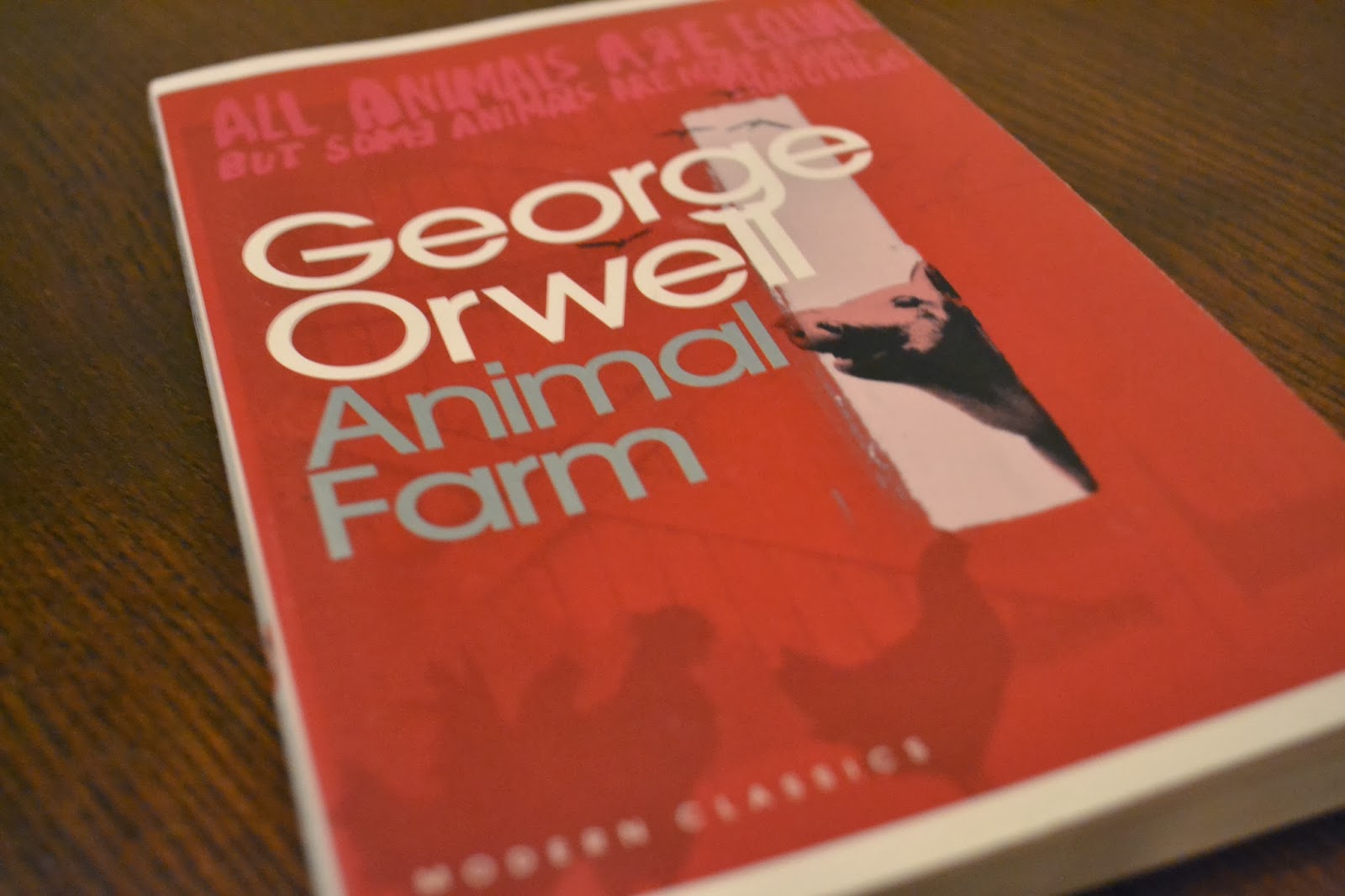
Animal Farm (George Orwell)

It's been many a year since I last read 'Animal Farm' at school, and after some long reads, I fancied something short, but not so sweet...and I saw it on the cheap.

There's probably not much that I can say about the book that hasn't been said before, and much better (just like every other book I've ever read), so I won't bother pretending that there's anything I can particularly say about it, other than that it is the classic it is, though, for me, not Orwell's best.


Days to read: 7
Days per book: 16.1


More Trees to Climb (Ben Moor)

Ben Moor has always been a bit of a Kevin Eldon for me: pops up in the shows of more successful comedian friends. Though Moor was always a bit of a poor man's version. But the boy has talent!

The scripts from three Edinburgh shows, 'More Trees to Climb' is a collection of bizarre tales, but done with an earnest wit and charm that make their short length seem like a bit of a prick tease.


The manner of the writing (or delivery if you're lucky enough to have seen the shows) flows effortlessly, despite the peculiar nature of the subject matter and punbearable wordplay.

This is a book that is simultaneously hilarious, magical, endearing and all that other crap. Now, I simply want to see him in his own show...much like Kevin Eldon.

Days to read: 6
Days per book: 15.9


Mustn't Grumble (Joe Bennett)

With nothing on my book shelf that hadn't been read needing something to read, I dipped into my girlfriend's book collection, picking one of her many books by non-Aston Villa left back, Joe Bennett. Being English, I opted for 'Mustn't Grumble', the Englishman in Kiwiland's journey around the land, commenting on how we're all moaning bastards.

Following in the footsteps of Morton before him for much of the journey, 'Mustn't Grumble' is very much like fellow Englishman living abroad, Alan Booth's 'Looking for the Lost'. Taking the same route as someone before him, he journeys in pursuit of identifying a national identity, stopping off in as many drinking establishments as possible along the way. But while Booth chose to walk, Bennett chose the very thing Booth was against: hitchhiking, only to quickly find that this will never happen in modern day England, soon deciding to borrow the car of an old school friend.


'Mustn't Grumble' is also written in the same, dry, almost arrogant wit of Booth's travel accounts; often humorous, often insightful and well-observed, often borderline alcoholic. And while entertaining, Bennett doesn't quite have the same magic as Booth, though with many of his titles sat on my girlfriend's shelf, I'm sure I'll be polishing off some more of his titles soon.    

Days to read: 15
Days per book: 15.9


Samaritan (Richard Price)

'Clockers' is without doubt one of the best books I've read in a while. Richard Price's story of a battle-weary detective's working through a case that makes him rethink his preconceptions is a detailed account of the motivations around murder and how the authorities work to solve them. 'Samaritan' is a similar story, again looking at a veteran detective, working a final case before retirement, struggling to comprehend the motivations of victims and suspects alike.

Returning to the fictional town of Dempsey, New Jersey, Ray is an overly generous television writer volunteering at a local school who is attacked at his home. With the case lacking interest for most detectives, the soon-to-be-retired Nerese, an old school friend of Ray, takes the case on but finds her old pal unfriendly in volunteering information as to who may be involved in his attack.

Again, Price divides the telling of the story between the two sides, detective and victim, gradually piecing the puzzle together and leaving the reader guessing as to the final outcome. Again, this is an absorbing read, drawing you in and leaving you to play detective yourself; coming to your own conclusions from seeing both sides of the story, unlike the protagonists.


'Samaritan' is good: Price has a definite style to his writing which is evident from both this and 'Clockers'. However, while 'Clockers' has eye-opening revelation, the conclusion to 'Samaritan' fails to hit the same heights, perhaps due to so many potential suspects turning it into more of a whodunit than an in-depth, psychological piece as to motivation to crime.     

Days to read: 21
Days per book: 16.0

Thursday, 30 August 2012

Every 14 Days...(12)

The Road to Wigan Pier (George Orwell)

‘…we have nothing to lose but our aitches.’

Trekking up nort’, t’e first ‘alf of Orwell’s ‘T’e Road to Wigan Pier’ in an, at times, ‘ars’ account of working class life in Britain, c’arting ‘is accounts of living quarters, trips down working mines and t’e general squalor of urban life in t’e industrial towns ‘e visited. T’e descriptions are detailed and bleakly negative, seemingly condemning of t’e working class by t’e lower-upper-middle class writer taken out of context. But t’e furt’er you read, t’e more t’e language is not a criticism of t’ose ‘e comes across, but more t’e system t’at creates t’em. Often t’ose ‘e comes across are described as ‘noble’ and ‘e is full of respect for t’e work t’at t’ey carry out, but also ‘e writes of ‘ow t’ey will never receive t’at same respect from ot’ers in ‘ig’er orders.

T’e second ‘alf is muc’ more controversial, and looks at t’e ideology be’ind class differences and political discourse. Based on ‘is experiences in Burma, Paris, London and ‘is trip nort’, ‘e is critical of bot’ t’ose on t’e Rig’t and t’e Left and could leave anyone t’at read it feeling a little alienated in any number of ways.

Part One is at times brilliant; at times a calculation of weekly incomes. Some of t’e descriptions flow poetically and s’ow t’e ‘ars’ness of t’e situation for many in 1930s England. Part Two can feel rant-like, wit’ page-long paragrap’s and individual criticisms, but like Part One, offers insig’ts from 75 years ago t’at could be applied today, particularly in lig’t of last year’s riots. 

Days to read: 17
Days per book: 14.2


Down and Out in Paris and London (George Orwell)

Something of a theme here…

Before making ‘is trip up nort’, Orwell spent time in Paris and London, living on the fringes in both. The book is an account of his experiences in short chapters, each an anecdote of the various roles he took/was promised or the many characters he met along the way.

The Paris half is focuses on his work as a plongeur in Parisian restaurants. Here it is a day-to-day struggle to find both work and money for food, while mixing with various foreign immigrants to the French capital while spending what little money they have on wine. The conditions are hellish and hours long and hard for little reward. Many working like this come from better backgrounds in their native countries, but finding themselves scraping-by to serve their ‘superiors’.

London sees a delayed promise of work leaving him without an income for the period of one month. Exchanging his clothes, he lives the life of a tramp, bouncing between spikes and lodging house, looking for hand-outs wherever possible.

The book is more like a collection of short anecdotes than the more detailed and analytical ‘The Road to Wigan Pier’. Indeed, much of the interpretation, from London at least, is included in his later work and feels like research building up to ‘1984’.

Days to read: 16
Day per book: 14.3


The Vulture (Gil Scott-Heron)

The’ original rapper’, Gil Scott-heron is a man I became aware of through hip hop, learning of his music and poetry. But before his music career began, Scott-Heron wrote his debut novel while at University – essentially dropping out to complete it. A young New Yorker himself at the time, the story starts with the murder of teenager John Lee as an endpoint to the lives of four characters all connected to the victim over the past year.

Scott-Heron, therefore, takes on the narration of four personas, all with their differing connections to the victim and motivations leading up to the death in July 1969, as well as dialogue and interpretations. An overarching narrative is thrown in throughout to add details to the murder, though this is less of a who-done-it and more an insight into the mind-set of a young generation of Afro-Americans.

The writing is clearly that of a poet, with verses thrown in, and a language that oozes with imagery of early 1970s Blackploitation cinema. While not without its flaws, ‘The Vulture’s is a strong work and his influence on later generations can be felt throughout.

Days to read: 17
Days per book: 14.3


The Lonely Londoners (Sam Selvon)

My English Literature teacher during GCSEs used to read all dialogue in novels in the supposed accent in which it was intended. If I had studied ‘The Lonely Londoners’ at GCSE, English lessons would have been much more entertaining.

Moses, who would feature in later novels by Selvon, is a first point of contact at Waterloo Train Station for many Trinidadians coming to London via the south coast. The story tells of various anecdotes of the various characters he comes across and how they all struggle to fit into their new life as a Londoner.

Writing from experience, Selvon, a native of Trinidad moving to London in the 1950s, chose to write ‘The Lonely Londoners’ essentially in patois. Not just the dialogue, but the narration is also that of Caribbean tongue, making it – while fully understandable – difficult to read. To fully get into it, a fair few pages have to be polished off in one sitting to get into the Caribbean rhythms of the writing style.  Combined with sentences pages and pages long, ‘The Lonely Londoners’ is difficult to get into at times. But stick with it, and it becomes almost poetic and humorous in how each character describes their new home.

Days to read: 16
Days per book: 14.3

Tuesday, 22 May 2012

Every 14 Days...(10)


My Name is Daphne Fairfax: A Memoir (Arthur Smith)

To me, Arthur Smith was a moaning old bastard that always seems to be reading an audio book whenever I’m in the car with my dad. More and more, I would see him on telly – and not just repeats of the Red Dwarf ‘Backwards’ episode, and eventually live at various Radio 4 recordings, as I myself became a moaning old bastard.

But I must admit I only really know the moaning old bastard Arthur Smith of the last decade; I know little of his time before he became either old, moaning and/or a bastard, and so for once, I actually read an autobiography that had featured some things I didn’t expect. For one, he’s not even called Arthur; he’s Brian to his friends – Arthur being his middle name – and his life has been one much more sex, drugs and rock ‘n’ roll than I had anticipated.

This isn’t the most revealing or creative memoir ever, but it doesn’t need to be, being well written and painting an interesting picture of stand-up from the 80s onwards, as well as life in South London over the latter half of the 20th Century.

Days to read: 14
Days per book: 14.5


Burmese Days (George Orwell)

I remember having to read ‘Animal Farm’ in English Literature at school when I was about 13 and thought: ‘He’s done quite well there.’ Probably about 13 years later, I read that other famous book that he wrote and was of a similar opinion that he deserved a good ol’ fashioned slap on the back for it. I decided to wait a little less time before reading another of his novels, his first: ‘Burmese Days’.

Based on his time spent as a policeman in Burma it’s a tale of colonial life for Brits abroad in their new habitat with the ‘inferior’ natives. So controversial was it in raising issues regarding colonial rule, it wasn’t published in the UK for quite some time, and only then in a version less likely to raise stiff, upper eyebrows as to the attitudes and behaviour of the British out in the Empire and the forgotten nature of their existence back home.

Spend a good amount of time over a two day period reading this and you will start to think in early 20th Century Orwellian language, such is the descriptive nature of the language here. It is another work by him with brilliant social comment and paints a picture of a bleak society that goes unspoken. He really was good, wasn’t he? Here, have another slap on the back, my learned friend.

Days to read: 11
Days per book: 14.4


The Hell of it All (Charlie Brooker)

The third book of his articles about television and stuff in general taken from the Guardian, and is much more of the same. Though, sometimes I do think he should have edited out some of the specific ‘Big Brother’, ‘Apprentice’ and ‘X factor’ articles, as: a) I did/do not watch any; and b) most people will forget the contestants in these shows the week after they finish, let alone recall them two or three years down the line, making many articles, while funny, quite irrelevant.

Days to read: 13
Days per book: 14.3


So, that’s it. With my travelling in Japan for three months, I took seven (count them) books with me to get me through my time in Asia, starting with ‘Dawn of the Dumb’. I have now completed them all with best part of a month still to go, leaving me blank for a while. Oh no wait, my girlfriend’s arrived in Japan to bring me some more…