Looking for the Lost (Alan Booth)
‘The Roads to Sata’ was a book I very much enjoyed. Beyond it being
what I wish my life was, it is a very well written and interesting journey
across Japan, by a sarcastic Englishman, walking all the way.
‘Looking for the Lost’ is very much a sequel, published posthumously,
telling the tale of three further journeys across Nihon, following the path of
famous Japanese before him. All three journeys find something of Japan’s past,
now lost through the ages, and ultimately never found.
The first trip is one through Aomori, following the footsteps (or dirt
tracks) of Dazai Osamu and his journey around his home region. The second takes
Booth to Kyushu, following the rocky road of mythical warrior Saigo Takamori.
The third then starts off in Nagoya, and the high-tech world of Nagoya's
International Design Exposition, before traipsing north through some of Japan’s
less explored areas, hoping to find something of its past.

The book acts as a bit of a metaphor for Booth’s reasons to be in
Japan. Moving during the Seventies to study Noh theatre, he soon lost his
passion for it, but remained in the country despite this. Almost as if trying
to rediscover what brought him there to begin with, Booth searches for
something intangible that he knows he will never find. The journeys coming at a
time when he would succumb to bowel cancer seem all the more poignant,
delivered with mild black humour references towards the book’s conclusion.
It is sad that this and ‘The Roads to Sata’ are the only real lasting
works of Booth, though leave enough for the start of another journey.
Days to read: 21
Days per book: 16.2
Can't Stop, Won't Stop (Jeff Chang)
I've read many a 'hip hop history' book, all written in different ways,
by different people, most of which say the same old things. 'ego trip's Book of
Rap Lists' is without doubt the pick of the bunch, aiming more to entertain,
inform and educate, rather than simply do a chronological look at how the music
progressed from the Seventies Bronx to the painful noises of today. Jeff
Chang's go at writing a hip hop history book is long, but engrossing enough to
keep you ploughing along through its considerable pages.
Bought for me as a birthday present based on a comment I must have made
many years ago, I'm always sceptical of any hip hop history book, feeling it
will probably annoy me for various reasons giving far too much page time to
penises, like Puff Daddy, or whatever he now chooses to be called. I,
therefore, started this with a sense of dread.
But, I was nicely surprised, finding myself quickly drawn in to the
book, absorbing every word. Focusing less on the music, Chang places hip hop
more in a wider social context, with the first few chapters looking at Fifties
and Sixties New York town planning and the politics of the music industry in
Jamaica.

Gradually, the music comes in and how the young stars deal with their
newfound fame takes over, looking at the more controversial acts, like Public
Enemy and Ice Cube. Groundbreakers, like Run DMC, the Beastie Boys and De La
Soul feature less in this history, being that they are more remembered for their
music, rather than the public outcry it created. This does mean that penises,
like Raymond 'Benzino' Scott get a disproportionate amount of pulp dedicated to
them.
A bit like hip hop music, the more time goes on, the less interesting
it becomes, but there is more than enough here to keep your head nodding, in
thought at interesting points, rather than the boom bap.
Days to read: 25
Days per book: 16.3
Japanamerica (Roland Kelts)
'Japanamerica' was part two of my two-part thirtieth birthday present
from an old friend. Again, I was sceptical. A book written about the coming of
anime into US consciousness seemed a bit of a cash-in on the sudden popularity
of anime, manga and hardcore Japanese goblin sex snuff biscuits in the West. But,
like the pre-conception-having twat that I am, my expectations were
unjustified.
Focusing on some specific case studies, Japanese-American Roland Kelts
looks more at how Japanese companies have perhaps failed to exploit the
potential success of their offerings in the West, particularly America. This is
the countered against products being shipped in the other direction, with
American companies varying success in Japan.

There is more interest in the business models of marketing anime and
manga both at home and abroad rather than the creative content. This would, I
thought, be something that would leave my cock floppier than a flick through a
copy of Geordie Readers' Wives.
'Japanamerica' isn't the greatest read, but does give some interesting
little insights into how Japanese media makes its way to us ignorant gaijin
baka.
Days to read: 10
Days per book: 16.2
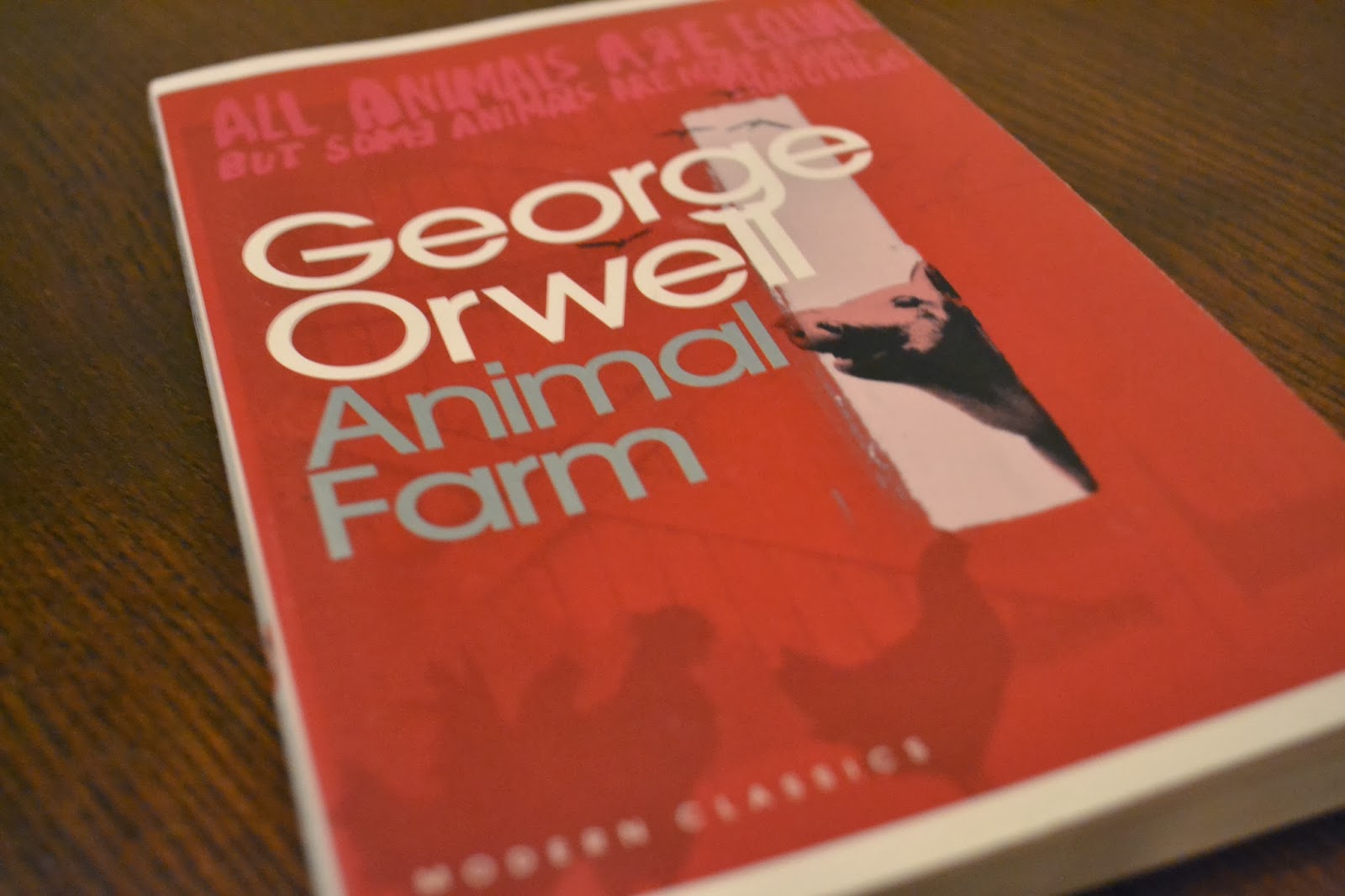
Animal Farm (George Orwell)
It's been many a year since I last read 'Animal Farm' at school, and
after some long reads, I fancied something short, but not so sweet...and I saw
it on the cheap.
There's probably not much that I can say about the book that hasn't
been said before, and much better (just like every other book I've ever read),
so I won't bother pretending that there's anything I can particularly say about
it, other than that it is the classic it is, though, for me, not Orwell's best.
Days to read: 7
Days per book: 16.1
More Trees to Climb (Ben Moor)
Ben Moor has always been a bit of a Kevin Eldon for me: pops up in the
shows of more successful comedian friends. Though Moor was always a bit of a
poor man's version. But the boy has talent!
The scripts from three Edinburgh shows, 'More Trees to Climb' is a
collection of bizarre tales, but done with an earnest wit and charm that make
their short length seem like a bit of a prick tease.

The manner of the writing (or delivery if you're lucky enough to have
seen the shows) flows effortlessly, despite the peculiar nature of the subject
matter and punbearable wordplay.
This is a book that is simultaneously hilarious, magical, endearing and
all that other crap. Now, I simply want to see him in his own show...much like
Kevin Eldon.
Days to read: 6
Days per book: 15.9
Mustn't Grumble (Joe Bennett)
With nothing on my book shelf that hadn't been read needing something
to read, I dipped into my girlfriend's book collection, picking one of her many
books by non-Aston Villa left back, Joe Bennett. Being English, I opted for
'Mustn't Grumble', the Englishman in Kiwiland's journey around the land,
commenting on how we're all moaning bastards.
Following in the footsteps of Morton before him for much of the
journey, 'Mustn't Grumble' is very much like fellow Englishman living abroad,
Alan Booth's 'Looking for the Lost'. Taking the same route as someone before
him, he journeys in pursuit of identifying a national identity, stopping off in
as many drinking establishments as possible along the way. But while Booth
chose to walk, Bennett chose the very thing Booth was against: hitchhiking,
only to quickly find that this will never happen in modern day England, soon
deciding to borrow the car of an old school friend.

'Mustn't Grumble' is also written in the same, dry, almost arrogant wit
of Booth's travel accounts; often humorous, often insightful and well-observed,
often borderline alcoholic. And while entertaining, Bennett doesn't quite have
the same magic as Booth, though with many of his titles sat on my girlfriend's
shelf, I'm sure I'll be polishing off some more of his titles soon.
Days to read: 15
Days per book: 15.9
Samaritan (Richard Price)
'Clockers' is without doubt one of the best books I've read in a while.
Richard Price's story of a battle-weary detective's working through a case that
makes him rethink his preconceptions is a detailed account of the motivations
around murder and how the authorities work to solve them. 'Samaritan' is a
similar story, again looking at a veteran detective, working a final case
before retirement, struggling to comprehend the motivations of victims and
suspects alike.
Returning to the fictional town of Dempsey, New Jersey, Ray is an
overly generous television writer volunteering at a local school who is
attacked at his home. With the case lacking interest for most detectives, the
soon-to-be-retired Nerese, an old school friend of Ray, takes the case on but
finds her old pal unfriendly in volunteering information as to who may be
involved in his attack.
Again, Price divides the telling of the story between the two sides,
detective and victim, gradually piecing the puzzle together and leaving the
reader guessing as to the final outcome. Again, this is an absorbing read,
drawing you in and leaving you to play detective yourself; coming to your own
conclusions from seeing both sides of the story, unlike the protagonists.

'Samaritan' is good: Price has a definite style to his writing which is
evident from both this and 'Clockers'. However, while 'Clockers' has
eye-opening revelation, the conclusion to 'Samaritan' fails to hit the same
heights, perhaps due to so many potential suspects turning it into more of a
whodunit than an in-depth, psychological piece as to motivation to crime.
Days to read: 21
Days per book: 16.0

