Showing posts with label Third Window Films. Show all posts

Wednesday, 27 September 2017

Raindance Film Festival 2017: Love and other Cults

Lost and out-of-control youth is not uncommon in Japanese cinema, with the rigid formality of Japanese schools countered by the over-the-top rebellion of kids who see no place for themselves within the education system. The second collaboration between British-born, now Japanese-living Third Window Films and director Eiji Uchida after "Lowlife Love", "Love and other Cults" is a film that follows similar lines of others in terms of theme, though the final destination isn't as per the usual.


Ai (Sairi Ito) is a girl who comes in many guises: the daughter of a serial religious and cult follower, she finds little place for herself at home; her mother often distracted by the new fad in her life. Eventually sent by her mother to a cult commune under Mount Fuji at a tender age, she soon finds happiness, before the cult's exposure and mass arrests leave her again without a place to find herself. Growing out of hand, she dyes her hair and shacks up with her boyfriend and his drug addict family of friends by her mid-teens.

Bumping into brief former classmate Ryota (Kenta Suga), she hangs out with him and his gangster mates after being ditched by her boyfriend, but lovingly welcomed by a class president Yuka's (Kana Matsumoto) family. Here, she switches between domestic bliss with her adopted family and her double life working in a hostess bar. Eventually found out, she moves back in with her mother - her apathy no longer a cause for concern - and works as a call girl.

Meanwhile, Ryota, our narrator, holds a torch for Ai, even when they drift apart at various moments. A bit-part player in Kenta (Antony) and Yuji's (Kaito Yoshimura) gang, he quietly keeps his head down, trying to gather together enough money to escape small town blues. Yuji himself has designs on becoming a yakuza, while natural gang leader Kenta gradually begins to reject the life upon meeting, Reika (Hanae Kan), an underwater photographer who shows an interest in him.


What runs throughout the film is the sense that none of the characters are happy. Whether a member of a religion, a cult, a gang, a school group, none feel they have found the place that's right for them. In doing this, despite the central focus on Ryota and Ai, Uchida switches the storyline to Kenta and Yuji and how their lives play out, as all four look to make a life-changing move to find their place, however unusual they may be.

Ryota and Kenta both reject the criminal life: Ryota going to university in Tokyo; Kenta leading a quiet life with Reika, deep-water diving. Being that this is partly based on the true story of a porn star whom Uchida noted for her cult followings, Ai works with Lavi (Matthew Chozick), the former leader of the cult where she was once happy, as a porn star, finding minor fame.

There are warnings that trying to escape a doomed fate are not always easy: Reika abused for Kenta's decision to quit the gang; Ryota losing his savings along the way. But, where other films about lost youth may build to exaggerated and frantic endings, or leave things open without established consequences, the characters of "Love and other Cults" are able to find a place where they are comfortable. The one unable to find this peace, Yuji, is left alone by his yakuza lifestyle. Wherever it may be, and with whoever it is with, the closing theme is one of changing for the better.

Much like the characters' lives, "Love and other Cults" is perhaps a little bumpy along the way. While probably a step-up in terms of production quality from "Lowlife Love", it is not as well crafted and witty. There are many twists of fate along the way that require leaps of faith in the audience, leaving the story flow a little unnatural in parts.
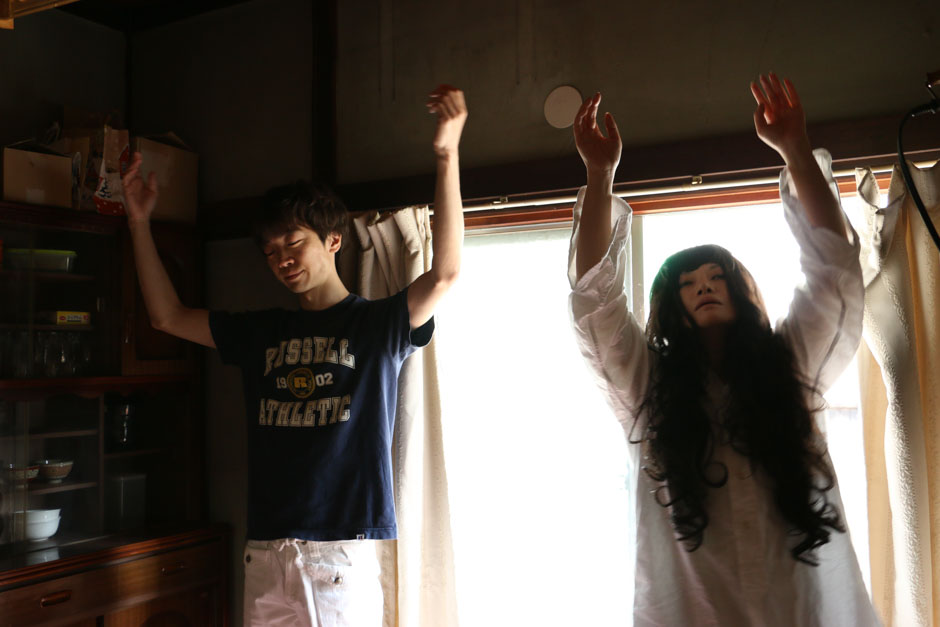

But the sense of peace reached in the film's ending is refreshing from how films of this nature can pan-out. Where the likes of "The World ofKanako" can build into messy, over-zealous finales, the stepping-down a tone by the film's end is welcome, despite the rather choice appearance of a school girl panties porn film script. But then, there is love...and other cults (sic).

Monday, 27 March 2017

Peppermint Candy vs. The Story of Yonosuke

When you look back on your life, what will your overall assessment of it be? Many would probably not like the results, finding fault in decision-making and turning points where the wrong direction was taken. What if it could have all been different?!

Two films that take a look back over a life – the Korean ‘Peppermint Candy’ directed by Chang-dong Lee; and the Japanese ‘The Story of Yonosuke’ by Shuichi Okita – are films similar in theme, though very different in their outlook of the lives they cover. Where there is joy, there is sadness; where there is laughter, there are tears; where there is innocence, there is guilt.

‘Peppermint Candy’ starts at the end: a student reunion twenty years on from a picnic sees a violent, drunk and lost Yong Ho disrupt the party; belligerent to his former friends. Ignored as he grows more uncontrolled, the group notice that Yong Ho is stood on the train tracks as an oncoming train approaches. Opening his arms, he embraces his demise. We are then taken on a reverse train ride through the life of Yong Ho to various key moments where his character is beaten, to see how an innocent student became a suicidal mad man. 


‘The Story of Yonosuke’, on the other hand, starts in the present, where Yoko receives a letter reminding her of her boyfriend from her days at University. Not just Yoko, however, various others at University with Yonosuke Yokomichi are given call to reminisce over the friend they had back in the 1980s. Each looks back with fond memories and a laugh on their face as they remember their extraordinarily ordinary friend.

There is a clear difference here straightaway: ‘Peppermint Candy’ looks at the negative impact that Yong Ho has had on the lives of those around him, and vice versa; while ‘The Story of Yonosuke’ reflects only on the positive impact the lead had on each of the lives he touched. The starting point for both characters is different, but as the film progresses, we learn that both, while students, had ambitions of being photographers.


Yonosuke is a country bumpkin moving to Tokyo, with unusual and bemusing mannerisms that those around him cannot help but find endearing…eventually. In his charming naivety, he finds himself at a photography exhibition, and soon becomes drawn to the art form. Yong Ho, we learn at the film’s conclusion, is quite a passionate young man, wanting to photograph ‘nameless flowers’, looking to the soon-to-be-named Sunim, who saves her money to buy him a camera.

Both have a naïve innocence about them at this stage in their lives, though only one will be able to maintain it. Yong Ho is soon tainted by his army service, accidentally shooting a young girl; and further corrupted by joining the police force, turning him into an aggressive and violent character. His new-found domineering personality soon finds him success in setting up his own business and playing the stock market, only to become embittered by his ex-wife, former business partner and cheating financial adviser, leaving him with nothing.


Yong Ho loses control over his life, and indeed his dream. In the army, he is ordered around, not cut out for the way of life. But it leaves a clear impression on him, and his return sees him unruly and unlike the young man he was before. His time at the police only worsens him further, with their underhanded tactics for getting confessions removing all morality from him. He becomes a man only after more money and more affairs with young women, alienating him from his wife and daughter, until all is lost.

Yonosuke, however, is a man devoid of any corruption. His simple ways show a man unconcerned by the opinions of those around him, happily going about his business. He has little in the way of preconceptions, and simply takes things as they come. Yong Ho becomes an embittered man, whereas Yonosuke remains a child, following his own intrigue. As the story progresses, we learn that Yonosuke did indeed become a professional photographer: his maintaining of this childish intrigue taking him there, while Yong Ho’s was quickly lost when serving in the army.

It is fair to say that the Korean film is more of a somewhat bleak look at life, with a focus on where it all went wrong; while the Japanese looks at what made things right for Yonosuke, more joyful in its outlook. Though the films are laced with similarities throughout.

Being films about stories of individual lives, they are both quite long. But, happily broken up into mini tales of different stages, they do not become too overbearing and are easy to digest, with a central arc to take us to the next: ‘Peppermint Candy’ takes us on a musical interlude with a reversing train; while ‘The Story of Yonosuke’ sees a different individual look back on the life of Yonosuke now they are older.


With some nice pacing, we learn that Yonosuke too – starting as a student with photography ambitions – is also killed by a train, though in very different circumstances. Yong Ho kills himself feeling that all is lost, whereas Yonosuke selflessly helps someone in danger, putting himself at risk. Yonosuke’s life is to be celebrated, while the sad demise of Yong Ho will probably see few mourn. In both, the message is that following your own path and not letting it be misdirected by others is perhaps the best way to go – as simple as it sounds, but as difficult as it is to live.

Both also offer a chance for reflection and point the question back to us about how our own lives have progressed: Were they happy or sad journeys?; and were they happy or sad outcomes? The starting point may be the same, and the final conclusion may be the same, but how we got there is very different.

As ‘Peppermint Candy’ concludes, with Yong Ho looking up at a passing train on the line that twenty years later will kill him, he looks forward to his life, while we look back on what he has become.


Both 'Peppermint Candy' and 'The Story of Yonosuke' are available via Third Window Films.

Wednesday, 1 February 2017

Unchain

There are many different styles and approaches to take when making a documentary, with the telling of the story very much down to the director's discretion. Though Toshiaki Toyoda's dip into the world of documentary seems initially to be more determined by available footage than any artistic choices.


But this is no surprise. 'Unchain' is a documentary about a man of not particularly much merit, and you would not believe that Toyoda particularly set out to make a documentary about the subject as a breakthrough moment early in his career. Instead, 'Unchain' feels like a personal interest story for Toyoda: a character he had stumbled across and felt the need to explore further; a film not exactly in need of a huge budget.

So, what does 'Unchain' Kaji have to offer the world to make you part with ninety-eight minutes of your time to share Toyoda's interest in him?

Well, in the mid-Nineties, Toyoda became friends with a group of boxers from the Osaka slum Kawazaki. One, notably, had a losing record, achieving one draw his career highlight: the fighter known as 'Unchain' Kaji. However, by the time Toyoda started filming the boxers, Kaji had quit boxing, suffering from an eye injury and subsequent mental health problems. The earlier parts of the film, therefore, rely on previous footage of his fights, and larks, the group of friends already had; Kaji himself now in hospital.


The footage, therefore, is very jittery and shot on lower-quality handheld cameras, an approach Toyoda maintains when he takes over, filming the subsequent fights of the remaining boxers. In between these fights, interviews with the boxers, friends and colleagues are included, minus Kaji, of course, giving a rather illusive and almost sinister air to what may have become of the troubled youth. The story of his descent, resulting in his being sectioned, is accompanied by docu-drama style recreations of the moment he sort to attack a work colleague over payments. It is from here that holes in the storytelling start to emerge.

Now in hospital, Kaji is almost forgotten for part of the documentary, instead the focus switches to the other boxers, trying to resurrect their moderate careers, though all themselves inevitably fail. One marries Kai's ex-girlfriend while he is away in hospital, as if he is almost out of the picture completely. The story of the titular character, therefore, is replaced by Toyoda's coverage of amateur boxing fights.

It is a shame that more was not done to try and cover Kaji's time away in hospital and what happened to him over this period. Though perhaps due to cultural and personal preferences, it was perhaps felt better not discussed. The first half of the film paints an interesting portrait of the erratic Kaji, the type of friend we all have: wild and unpredictable, yet earnest and loyal, leaving you unsure whether to push them away or pull them in for embrace. Toyoda felt an affinity with this 'loser' whose life took a turn for the worse.


The others featured themselves all end up failing, though their more conventional personas make them much less intriguing, and the documentary dips a little as focus switches to them, the extended footage of their fights at times a little awkward and drawn out.

Kaji returns to the scene towards the end, catching up with his old friends who haven't seen him since he went into hospital. He watches on, as he did before, as one of his fellow boxers fights in Tokyo, inevitably losing. Kaji is now a more subdued character than the one portrayed from earlier footage, seemingly coming to terms with his status.

More on how the old Kaji became the new Kaji would have rounded 'Unchain' better. Instead, this is a mere snapshot of a group of friends, perhaps lacking a little more depth, for whatever reasons. Though, as often with these personal interest pieces, it is an intriguing look at the lives of those on the fringes of society, perhaps now boxed into a corner and left to be forgotten.

Thanks to Third Window Films for bringing them back from obscurity...


'Unchain' is available as part of the Third Window Films blu-ray release 'Toshiaki Toyoda: The Early Years' alongside 'Pornostar' and '9 Souls' on Amazon.

Sunday, 12 June 2016

Lowlife Love

I write this having been in anticipation of seeing this film for about 15 months.

Contributing a small amount to their Kickstarter campaign - though that doesn't mean I have a vested interest; it's not like I'm getting a share of the profits or anything - 'Lowlife Love' is the debut self-produced film from London-based Asian cinema distributor Third Window Films. In the game for just over a decade now, Third Window have developed into specialising in a certain brand of Japanese cinema, bringing some of the more quirky Japanese comedies and dramas to the English-speaking world, as well as releasing some modern day Japanese classics from the likes of Takeshi Kitano and Shinya Tsukamoto.

I was in no doubt, therefore, as to what to expect from director Eiji Uchida's latest work. A former pinku eiga director himself, 'Lowlife Love (gesu no ai)' works to explore the seedy side of low level filmmaking in Japan and how all involved are to some extent low lives.


To start, you may think you're watching the wrong film: appearing-in-releases-with-increasing-regularity Kiyohiko Shibukawa stars as Testuo, a director that had a minor hit some years back and has been a bit of a bum since in a scenario that feels incredibly similar to the role he recently played in Akira Osaki's 'Obon Brothers'. Ever since, Testuo has spent his days exploiting aspiring actors and filmmakers by demanding high fees to be part of his filmmaking club. Lazily teaching and working on low-level POV porn films with his partner in crime Mamoru, he sleeps with wannabe actresses when not accidentally masturbating over his sister while still living at home, despite now being thirty-nine.

Though one day, young actress Minami and writer Ken respond to the film club's advert and pay the signing-on fee. With Ken's script one he sees potential in, as well as seeing even more potential in Minami's underwear, he sees an opportunity to re-ignite his career. But not wanting to 'sell out' like others before him, he finds himself struggling to find funds, as well as talent, in realising his ambition, soon realising that all in the film industry are low lives.

'Lowlife Love' is very much a self-aware piece as a low-budget independent film with some titillation about low-budget independent films with some titillation. Based on many of Uchida's own experiences, the scenes expose some of the realities that those wanting a career in film need to go through, comparing filmmaking to 'falling for a no good slut.'

Not wanting to be a 'sell-out', Tetsuo is left with little more to do than become a sex addict; the more successful Kano is realises he had to fight hard to get where he is, now exploiting young actresses for his own ends; and Minami, a once meek Christian, soon rises to stardom, using sex to get her way up the ladder, now looking down on Tetsuo whom first realised her talent. Each have to go against their convictions to get where they want to be, whatever they may have once been.


A low-budget, independent film from a rookie company, there are signs of this throughout. Many scenes are filmed with long takes and perhaps not always the greatest sound recording, though it would appear the budget has been well spread, with less spent on less pivotal scenes to allow for more important scenes towards the film's conclusion to get greater focus. The cast is nicely put together, however, featuring those that have appeared in previous Third Window releases.

Included in the official selection at the Tokyo International Film Festival in 2015, campaigning for the term 'gesu' to get an official inclusion in the Oxford English Dictionary and soon to get a wider release after its run on the festival circuit, all signs point to this low life possibly giving a little reminder to the Japanese cinema industry of its many weaknesses, though we still fall for it, anyway.

Monday, 23 November 2015

10th London Korean Film Festival

Despite a hectic work and social life this November, I had to do all in my power to watch at least one film from this year’s London Korean Film Festival – the tenth that has now been held in this there city of fair London. But, in fact, I was able to go one better, quite literally, fitting two, count them, films in. This year’s schedule was quite a long one, with films shown only the once over numerous different strands. I missed some ones that I would have very much liked to have observed, and was unable to make any of the late-night, bag-o-snacks screenings that were on offer for midnight popcorn fodder.

So, what does the celebration of ten years of Korean cinema in London have to offer?


The Royal Tailor

This is quite a strange one for me. I have watched Korean period dramas in the past, and while I can appreciate the production qualities, they do not quite hit the spot for me. That said, I ended up in the cinema watching this one. And it was a little different from what I was expecting.

Making an ass of myself with my assumptions, I anticipated quite a slow piece, living up to costume dramas the world over. But this is a drama about costumes with a great deal of comedy thrown in for good measure, never getting too heavy, but with enough seriousness to steer it away from an all-out, knockabout comedy.

Dol-seok is the royal tailor: he is tasked with making all the formal clothes for the King, a man who seems less than content in his life and his sex-less marriage to his young Queen. Outside of the royal court, a young tailor is making a name for himself among the woman-folk, and soon he is brought to the King. Successful in his endeavours, Kong-jin finds himself under Dol-seok’s tutelage, but soon his more masterful skills become both a blessing and a curse, bringing scandal in his designing for the Queen and jealousy from Dol-seok, costing him dear.

Director Won-suk Lee starts off fairly light with this film, using comedy in his catwalk-style montages of Kong-jin’s ‘daring’ new designs being sported about town. The film then becomes a character piece, charting Kong-jin’s relationships: in passion with Dol-seok; and unspoken romance with the Queen. All is well and good in the lives of the three leads, with the tailors happily learning from each other, while Kong-jin builds the virgin Queen’s confidence.

  
However, as the King becomes more involved, the film moves to a darker tone, with loyalties tested, and inevitably the new, young tailor being put in his place, feeling the wrath of his superiors.

An incredibly high percentage of the budget for this film was spent on the costumes – the majority, even. For a period drama, it is perhaps not unusual for this to be the case, though this stands out in ‘Royal Tailor’, with countless numbers of costumes throughout. But, is this at the expense of other areas? Thankfully not. The acting between the leads is strong, necessary for a story built on relationships, and the look and style of the film are in keeping with the wardrobe budget.

Perhaps the links to the true story on the film’s conclusion feel a little unnecessary and detract a little, but for something that’s not my usual style, this is  a well-cut piece.


Romance Joe

A film by any other name, would not be as much of a draw as ‘Romance Joe’. With a name like that, you just simply have to watch it, don’t you?! The debut feature by Hong Sang-soo protégé, Kwang-kuk Lee, his mentor’s influence is laced throughout this non-linear, post-modern piece, that could prove an editor’s – and indeed a viewer’s – nightmare.

‘Romance Joe’ is a film of stories within stories, though by the film’s conclusion, we realise that these are all in fact part of one greater story that doesn’t care much for chronology. Someone is missing and his parents come to his flat to look for clues, accompanied by one of his friends. We then switch to a struggling film director, staying in a small town motel to get ‘inspired’ to write a new script. Ordering ‘coffee’, the extra cream delivery girl begins to tell the story of ‘Romance Joe’ – another struggling film director that was distracted from his suicide attempt when she accidentally bought him some ‘coffee.’


Along the way, and in no particular order, the story of ‘Romance Joe’, the ‘coffee’ girl and teenagers in love play out for us, switching between narratives, though gradually pulling themselves together by the end so that the viewer can piece together the story that they think they have just watched. Confused? Yes, as are many of the lead characters.

A love story full of twists and turns, this could easily have been made by Hong Sang-soo himself, feeling very similar to many of his films. However, made in 2011, this comes before many of Hong’s more recent unconventional rom-coms, and so Lee must be given some credit for his attempts at originality. Like all films structured –or not structured – in this way, ‘Romance Joe’ can take a little while to get a grasp of. However, once you’re in, you’re in, and you find yourself engrossed in the story as more and more unfolds and is revealed, or at least I did.

Films like this aren’t for everyone, and I know more than a few that have got confused, bored or both by Tarantino’s work, including myself. But if you don’t try to make it too epic and make too much of the switching of narrative, it can be a nice way to keep the audience interested and paying attention.

Beyond Da-wit Lee of ‘Pluto’ fame as a young Romance Joe, there are no established actors with long CVs to draw people in. Instead, Lee’s debut feature is a simple complicated film about some confused individuals.


Prior to ‘Romance Joe’ being screened, the good people of The London Korean Film Festival treated us to Kwang-kuk Lee’s short ‘Hard to Say’. This is a strange tale of a girl who tries to impress a boy by learning to play the guitar badly. She then dreams of the roles being reversed and the boy intrigued by her, before waking from her slumber. Like ‘Romance Joe’ and the films of Hong Sang-soo, ‘Hard to Say’ is simply confusing.


Recent film festivals and talks from Japanese directors have shown a gulf in Japanese cinema between the haves and the have-nots. Films are either mega-budget, idol-laced movies to eat popcorn by; or low-budget, having to work creatively shorted films that are perhaps restricted in quality by lack of proper funds. As a result the Japanese film industry is struggling.

At the last couple of BFI London Film Festivals, stand out works for me have been Hong Sang-soo’s ‘Hill of Freedom’ and documentary ‘My Love, Don’t Cross that River’. Both Korean films among a mix of global offerings show that Korean cinema is healthy, thriving from government funds and international film festival screenings. The fact that a thing such as the London Korean Film Festival exists – and has done for a decade – is testament to this.


With Third Window’s Adam Torel comparing the way Korean cinema is run versus Japanese, we can see that Korean cinema is a thriving, well-run industry, and the number of strong low to medium budget films making their way to the UK only confirms this. For me, Korea is one of the leading lights in cinema, and should serve as a blueprint for how the art form should be handles. 

Thursday, 2 October 2014

Fuku-chan of Fukufuku Flats (Raindance Film Festival 2014 Part I)

The Raindance Film Festival in London is one of those film festivals that I don't always get excited about, falling as it does behind the likes of the London Film Festival, the Terracotta Film Festival, the Japan Foundation annual film programme, the London Korean Film Festival and the all-night Steven Segal Wank-a-thon in my thoughts. That's not to say it's bad or anything, I just always forget about it.

This year was no exception, coming at a time when I was far too busy to even think, let alone watch a film. But hang on, there's some good shit here. Decisions to attend films were made slightly late in the day (i.e. the night before) and I was watching the films in an uncomfortable state of tiredness.

Essentially, I couldn't make many of the films anyway; and those I did see were squeezed in around important things in my life (wedding food tastings, Villa playing Man City). There were, however, some good films on offer, notably the Third Window Films line-up of four, count them, films...I made one of them (I've pre-ordered the 'New Directors from Japan' DVD already).

So, that's three paragraphs gone and I haven't even mentioned a single film yet. 'Fine, Totally Fine': now that's a film. The debut feature by director Yosuke Fujita, it is a film that I very much liked. A nice, gently-paced comedy, it is full of 'Quirky Guys and Gals', much like the title of his next feature. I, therefore, had high hopes for his latest work: 'Fuku-chan of Fukufuku Flats'.

Reading the premise, you instantly knew this was going to be in much the same vein of 'Fine, Totally Fine'. About a man - played by a woman - Fukuda is a happy-go-lucky industrial painter whom is everybody's best friend and counsellor, helping introverted colleagues and let's say quirky neighbours alike. But there's something clearly missing from his life (not the obvious being that this is a female playing a male).

The side story of aspiring photographer Chiho soon merges with the life of the lead as she unannounced arrives at his door: his first love, but essentially a girl that tricked and embarrassed him when they were at school together. A fat man with an unusual face (you can see why they cast a female as the lead), Fukuda re-forms a friendship with Chiho largely based around her taking photos of him. Much like 'Fine, Totally Fine', sexual love might not make the ending happy, but a group of misfits find each other and so maybe feel less confused about their unique ways.


With my constant referencing to 'Fine, Totally Fine' it's clear that I probably prefer the earlier work to this new one. And I probably do, but the fact that I was anticipating this film for a while means that I'm not concerned by this.

The role of Fukuda, played by female comedian Miyuki Oshima, is good as the lead, necessary for a character comedy to work. My always favourite Yoshiyoshi Arakawa is not as involved as I would normally desire though provides some incredibly necessary facial expressions, while the supporting characters are weird and wonderful, particularly the typical-of-Japanese-comedy duo of Mabuchi (Tateto Serizawa) and Nonoshita (Asato Iida): two men that very much need to get laid.


A scene that surmises this film stylistically, and indeed Fujita's brand of direction, is the beautifully insane visit to a curry house. Odd human beings, a baffling situation, social awkwardness, all done with a sense of calm...until someone bursts into an ultimately futile fir of rage. Fujita's style is very much in-line with that of other Japanese directors when injecting some comedy into their films. A very subtle buffoonery is present throughout, sometimes reminiscent of an early Kitano Takeshi at his most silly. 

Third Window Films have distributed many films along a similar line as this and continue to do so. A gentle brand of foolishness that is ultimately fun to be enjoyed, with the odd bit of Shinya Tsukamoto thrown in for balance. 'Fuku-chan of Fukufuku Flats' was a film I was anticipating, and I'm glad I did. Now let's all try and stab someone for no apparent reason...