Sounds here , noises there
Matsuri - DJ Krush
Kidoairaku - DJ Yas
Walk into the Sun - Organized Konfusion
On the Painted Desert (DJ Krush Remix) - Boom Boom Satellites
Kikkake (Anchorsong Remix) - DJ Kentaro and DJ Krush
Gekko Suiren - Haiiro de Rossi (no findy)
Ever Love - Joe Hisaishi
Secret Samba - Doctor YS and Cosmic Drunkards
Elegant Space - Yoshinori Sunahara
Creepy Crawly - The Web (no findy)
Ultimate Eternity - Nomak
...And Alone - Joe Hisaishi
I Be Blowin' - De La Soul
Return of the Loop Digga - Quasimoto (madlib)
Tell Me Who Profits - Souls of Mischief
Hit it from the Back - Mobb deep
Take a rest - Gang Starr
Move Slow - New Flesh and Beans
Sunday, 13 April 2014

Monday, 3 March 2014
Every 14 Days...(19)

Hagakure (Yamamoto Tsunetomo)
I'm sure I'd read this before, but sorting through my books, I noticed
that the spine looked barely touched. Needing something to read, I decided that
I would read it (again) and see if anything stuck in my memory this time.
Deemed 'the book of the samurai', this edition of 'Hagakure', or hidden
leaves, translated by William Scott Wilson features around three hundred of the
original teachings of Yamamoto, narrated to disciples when retiring as a monk.
Essentially a series of anecdotes, these form the key teachings and life
lessons by which samurai should live in the spirit of bushido.
With thoughts and ideas that have been seen throughout Japan's history,
these are moral learnings as to how to samurai should conduct themselves, with
the key life lesson: if in doubt, kill yourself. Many are thoughts transferable
to the modern world, though others seem little more than little tales that seem
irrelevant today and simply of the time in which they were conceived. Those
left out by Wilson are more administrative matters or simple accounts of events
of the time, with those included the more interesting point to teach us about
an important way of life in Japanese history.
Read, I now have Internet evidence of its completion, though the spine
looks barely touched.
Days to read: 17
Days per book: 16
The Nigger Factory (Gil Scott-Heron)
With a delightful title, 'The Nigger Factory' is the second novel
written by poet and musician Gil Scott-Heron. Like much of his music, it's a
political piece about the educational system in America during the Sixties. Set
at a Black college in Virginia, it focuses on a three day period in which
student protest erupts into violence.
Earl Thomas is the student president at Sutton University, and with two
friends creates a list of actions they want to see taken at the University. The
ideas are stolen by a more militant student group who quickly force the
'demands' on the powers that be within the university. The students demand
immediate action, which the university refuses to give into, resulting in a
student strike, internal conflict and the eventual closing of the university
campus.
In seeking education and wanting to see change to the way the
university is managed, what results is a violent struggle and all being left
without. Scott-Heron wrote the book as a criticism of the educational system
and its slow progress in updating with the times, without really allowing
students to move forward with the times.
Like 'The Vulture' before it, 'The Nigger Factory' is a good read, with
some interesting ideas and critiques on the changing times of the Sixties and
Seventies.
Days to read: 14
Days per book: 15.9
Homage to Catalonia (George Orwell)
So continues my mission to get all of George Orwell's books read by
some point in my life: now at 'Homage to Catalonia'. Written from memory of his
time fighting in the Spanish Civil War, the book is a war diary about the
complex political divisions within the War which would shape much of what he
would subsequently write.
Little fighting actually happens over the course of the book. The start
is more a description of how he and fellow militiamen kept themselves
entertained when stationed at the Front Line with little more to do than stare
back at the opposition. Then a long period of stand-off in Barcelona where
little actually happens in the end. The comes his infamous neck wound from being
shot, resulting in hospital stays and his attempts to leave the country once
his group is outlawed. The book then closes with his take on the political
divisions in Spain at the time he was there.
On paper, this isn't the most entertaining of reads. And, indeed, it
isn't. But 'Homage to Catalonia' is an important step in Orwell's life and the
experience of fighting fascism in Spain in the Thirties would shape his most
famous works in the Forties, and for that reason alone, it is an important read
in Orwell's oeuvre.
Days to read: 14
Days per book: 15.9
A Christmas Carol and Other Christmas Writings (Charles Dickens)
Reading 'A Christmas Carol' almost feels like a thankless task, being
that the story has been told in a hundred ways on screen and stage. With 'The
Muppet Christmas Carol' working direct from a lot of lines in the book, I
almost felt like I knew half of it before having turned a page. But persevere I
did.
And I'm glad I did. I can't remember having ever read any Dickens
before, and 'A Christmas Carol' is a story full of wit and humour that wouldn't
come across in a film, only by reading.
But while 'A Christmas Carol' proved to be the classic that it is, the
other writings in this collection weren't really for me. While '' and 'A Christmas
Tree' are short descriptive pieces of a Christmas scene, but some of the others
feel like long, overdrawn, Victorian descriptions of bleak life, which my
uneducated mind felt in no way entertaining.
I'm sure much of Dickens' other classics are as good as they are made
into films and comedy parodies for, and I'm sure I will try some at some point,
but only half of what was contained here worked for me. But still, with this
collection of writing, you can see the sheer influence that Dickens' writing has
had on the modern ideals of Christmas. God bless us, everyone.
Days to read: 14
Days per book: 15.9
Coming Up for Air (George Orwell)
I'm really starting to nail this fourteen days per book malarkey now:
four books read; fourteen days to read each now. And what's more, I've notched
off another Orwell. Oh, and another good one - the man now has a one hundred
percent record with me; and my opinion counts, whether I use semi-colons or
not.
Tired and fed-up with his life and the modern world, George Bowling yearns
for the days of his childhood in a small village, away from the stresses or
work, family and the sheer absurdity of everything he sees before him. But on
leaving London to visit his boyhood home, he finds something different, but
soon realises that the more things change, the more they stay the same,
returning to his life and the endless cycles of nothingness he now feels.
What struck me first about 'Coming Up For Air' is its timelessness.
Written in 1938, it is a book that feels just as relevant today as it did
before the Second World War. With so much future on the future and the
inevitable and looming threat of war with Germany. So much of what is written
seems to come to pass, making the bleak view of the future seem more relevant
than that of '1984'.
'Coming Up For Air' is a beautifully easy read, much less political
than some of his other works, but with a similar effect, and along with his
other works, like 'Burmese Days', says as much about the world now as it did
when it was written.
Days to read: 14
Days
per book: 15.8
Sunday, 9 February 2014
East Side Stories
Ah, the folly of youth. So goes the theme of this year's Japan Foundation Touring Film Programme. Yes, serving as an introduction to Japanese
film this year is a selection of films about those often overlooked in film
humans: young adults. With eleven films on offer, I ventured to a modest three
of them (that's 27%), somehow choosing the ones that featured young men that
are unable to get laid.
Otakus in Love (Koi no Mon)
You always get those films that essentially feel like a bit of a laugh
for a group of film-makers to get together and make, and probably get a bit
drunk. 'Otakus in Love' is one such film. Written and directed by Suzuki
Matsuo(you know him; the one who played the twins in 'Ichi the Killer') and
based on a manga, it also features 'Ichi the Killer star and director Tsukamoto
Shinya in a supporting role and 'chi the Killer director Miike Takashi in a
fairly non-existent role.
To say this film is silly would be accurate: Aoki is a young otaku
seeking employment, often failing, trying to fund his bizarrely confused dreams
of being a manga artist. At another failed job attempt he meets Koino, a fellow
otaku and failed manga artist who finds his strange ways hotter than hot. But,
being nerds, their falling in love is fraught with confusion as to what they
should be doing, in an on-off relationship, which obviously wins in the end -it
is a rom-com after all.

There is nothing particularly impressive on display here, nothing to
set the world on fire or win any awards. It is stupid fun made by a group of
people that have collaborated in the past, featuring cameos and in-jokes that
are more for the makers rather than the consumers. But the story does enough in
terms of laughs and entertainment to succeed. 'Otakus in Love' shows a part of Japanese
youth: that of writers of fan-manga and cosplay, though probably tells us more
about the lives of the film-makers rather than Japanese youth itself.
Love Strikes (Moteki)
'Love Strikes' was introduced at the programme by director Hitoshi Ohne
and lead actor Mirai Moriyama. On the first day of the London Tube strike, this
lead to hilarious anecdotes of having to run from a bus from Brixton to make
the film start (which was subsequently delayed). For some reason, the version
screened had had someone fiddling with the contrast settings on it, with
moments of the film looking like the result of some appalling make-up work.
Ohne acknowledged this and urged the audience to use its imagination in
enjoying the film.
'Love Strikes' is a film that certainly has a lot of imagination. Like
96.4% of contemporary Japanese films, it's based on a manga, though the film
version takes it to another level. Fujimoto is a 'second virgin' working at an
online pop culture magazine, a source of much politically incorrect humour for
his work colleagues. On meeting a fellow music nerd, a female one, on Twitter -
regularly referenced throughout the film - he then hits a period of moteki: a
purple patch with women. But, in his desperation to be with his first love,
Miyuki, he finds that success with women brings him problems he has no idea how
to handle, leading to more pain, frustration and angst than being hapless with
women ever did. But, being another rom-com (aren't all films about youth?!),
all works out fine in the end.

With music an important element in the film, director Ohne throws in
various emotional musical numbers, directed as karaoke routines, complete with
introductions and sing-a-long lyrics. All this provides much hilarity.
Interestingly, one of the highlights of the film is the closing credits, based
on the social networking sites often referenced throughout. At times, the
realism in 'Love Strikes' is strong, showing the stresses and strains that
social media and mobile communications put on young people in love, with
Fujimoto often becoming obsessive over the most trivial of things. (Though with
Fujimoto's character being thirty-one years old, it's difficult to know how
youthful this really is.) However, all this angst seems to be written off with
the happy ending, which detracts a little from some of the film's more serious
points. Though with its various pop culture references and cameos by leading
J-Pop stars, such as everyone's favourites Perfume, 'Love Strikes' proved to be 'big in Japan'.
The Story of Yonosuke (Yokomichi Yonosuke)
You know that weird bloke you went to uni with? You know the one? It
was me. Well, this is what Yoshida Shuichi clearly had in mind when he wrote
the novel 'Yokomichi Yonosuke'. Seemingly semi-autobiographical, it tells the story
of Yonosuke, a hilariously-named student from Nagasaki, arriving in Tokyo in
the late Eighties to start university. A seeming odd-ball, played by a
different-haired Kengo Kora, in his own unique way, Yonosuke touches (not in a
bad way) everyone that he meets, with the various young students he comes
across (not in a bad way) shown to be later reminiscing about their friend from university a
decade and a half later.
Telling the story on one's life can take a long time, and 'The Story of
Yonosuke' is a long film and seems to start slowly. But unfolding like chapters
in a book, switching between the past and the present, the film is broken up
enough into digestible chunks that mean it doesn't drag or bore, something that
would have harmed and otherwise good film. But luckily, it doesn't, and 'The
Story of Yonosuke' is a strong piece about nostalgia.

Watched a decade after graduating from university, one can definitely
relate to the characters looking back at their old friend - one probably not
seen for many years - with Yonosuke a recognisable individual which one would meet
at a seat of learning, but would be left on with memories of years later. What
did happen to that weird bloke? He's writing this.
The purpose of the Japan Touring Film Programme is to serve as an introduction
to Japanese cinema, though probably often finds itself preaching to the
converted. But, while quite a specific selection viewed, one thing that came
across is that despite being on the other side of the planet and doing things
in their own, unique way, die jungen of Japan face the same obstacles as us
over here in the U-of-K: turning masturbation into sex, of course.
Hey you: do you live in Belfast, Bristol, Dundee, Edinburgh, Newcastle
(I have), Nottingham or Sheffield? Yes? You poor piss-stick. But the Japan
Foundation Touring Film Programme is heading your poor, depressing way.
Sunday, 2 February 2014
Eclair
One thing that is very apparent when watching Japanese film 'Eclair' is
that this is very much a TV movie. The writing, directorial style, acting, look
and feel of 'Eclair' are all very much designed to be watched on a small screen
rather than a silver one.
Young Akira is an orphan, sent to a strict reform school where he is
subjected to abuse from sycophantic teachers on a daily basis. His sole escapes
are his dreams of eating sweets that he shares with young, female teacher,
Yoko. Adopted by a sour old woman, he is again abused daily, but in a slightly
nicer way and starts working at a local cinema in Tokyo.
However, life is still not peachy, and Akira runs away, joining a
travelling performance troupe, but again finds himself alone when the troupe is
disbanded with the outbreak of war. He
then leads a band of young orphans that try and scrimp and save on the war-torn
streets; all the while, dear, sweet Yoko searches for him, before eventually
they are reunited.
Much like a chocolate eclair, 'Eclair' is sweet, perhaps a little too
sweet, much like an eclair. In what is quite like a Stewart Lee description of
a 'tragic lives' supermarket-bought toilet book, Akira's life is full of
sadness and misery, with the all important dreams of sweets the one thing
keeping him going. There is far too much melodrama, far too much sentimentality
in the acting and direction and far too many coincidences, convenient plot
devices and unbelievable character motivations. Akira's life keeps going from
bad to worse, to make it so much more enjoyable to see it go from good to
better by the film's conclusion.

All-in-all, this is something sweet, simple and made to be enjoyed by
housewives watching daytime television. In that sense, 'Eclair' almost seems
the perfectly marketed film, satisfying the Japanese department store liking of
all things sweet and overtly packaged in pure aesthetics. The conclusion of the
modern day descendant of Akira and Yoko working in her stylised bakery furthers
this.
Being a thirty-something, British male, this film probably isn't aimed
at me, but by the end, you can't help but feel disgustingly entertained. 'Eclair'
is too sickly sweet and isn't good for you, but like a sickly sweet desert, you
find it enjoyable, in a dirty, hateful way.
Saturday, 25 January 2014
Tokyo Fist vs. Kids Return
It's Tokyo, the mid-Nineties and you fancy punching the shit out of
someone. That's how total cult directors Tsukamoto Shinya and Kitano Takeshi
felt, at least. Coming a year apart - much like your mother's sex life - both
made Tokyo-based films centred around boxing: 'Tokyo Fist' (1995) and 'Kids
Return' (1996), both bringing their own unique flair to the art form.
To start, the films are very similar: 'Tokyo Fist' starts with
salaryman Tsuda bumping into an old school friend, Kojima, a part-time boxer.
Likewise, 'Kids Return' begins with former best friends from school, Masaru and
Shinji, happily bumping into each other on a Tokyo street, both recognising
that their lives have taken a downward spiral since they last saw each other.
However, due to the nature of both directors, the similarity largely ends
there.
'Tokyo Fist' is very much along the lines of Tsukamoto's most famous
work: 'Tetsuo: Ironman'. Focusing on ideas of revenge and aggression, Tsuda
soon becomes paranoid that his old classmate might be knocking up his missus,
Hizuru. His paranoia gradually drives Hizuru away, as their quiet life becomes
loud, aggressive and full of blood-splattering scenes, with her ending up in
the arms, and bed, of Kojima, played by Tsukamoto's brother, Koji. The anger
and rage building inside him, exemplified by the ever-present loud music, Tsuda
joins Koji's boxing gym, determined to beat him in the ring, much like Koji is
doing to Hizuru.

The film then becomes a loud, brash experience, with fast camera
movements, editing and thrashing music, leaving the viewer out of breath just
watching it. And, as ever, a confusion is created as to what exactly is going
on, throwing in extreme moments to push things just that little further.
Rage, obsession, and fetish are themes running throughout Tsukamoto's
works, and 'Tokyo Fist' is no exception, working as a more polished version of
'Tetsuo: Ironman'. The special effects are still a little budget, but creative
in the excessive blood pouring and Hizuru's new fetish for piercing any part of
her body possible. Punch, punch, punch is the style for the boxing scenes, with
Tsukamoto creating a work to seep into your mind and punch your brain into
dazed confusion.

But where Tsukamoto chooses to show graphic violence and gore, this is
the very thing that Kitano often avoids. Since starting with 'Violent Cop', the
violence is Kitano's films is more in the mind than on screen. The use of still
cameras and editing means that actual acts of violence fall out of shot or are
skipped for comic timing. The majority of punches thrown in 'Kids Return' are
at punching bags or in sparring practise.
'Kids Return' is seen as Kitano's most autobiographical work, set in
the part of Tokyo where he grew up and featuring events and job roles that he
himself experienced while growing up. The two friends, Masaru and Shinji drift
through school, seen as the ultimate prodigal sons by their teachers. Neither
has much direction; simply wreaking havoc on the lives of their classmates.
Meeting his match, Masaru decides to take up boxing, but soon realises he
hasn't the discipline for the sport. His perennial sidekick, Shinji, however,
does, and his talent is quickly spotted by the gym's coaches. Masaru then
drifts away, becoming a low level yakuza.

For Shinji, boxing is a sense of direction after days drifting, rather
than an act of aggression. 'Kids Return' is all about direction when entering
adulthood, mirroring roles taken by Kitano himself. Meek Hiroshi tries his hand
at selling scales and driving a taxi on finishing school - two jobs Kitano had
- but soon finds that neither provide him with what he wants out of life. Two
students forming a school double act perform stand-up comedy to their
classmates with a manzai act similar to that brought Kitano his initial fame.
If anything, 'Kids Return' is quite a depressing film. On leaving
school, hopes and ambitions are quickly lost for all characters, with all left
feeling lost and abandoned by their seniors. Hiroshi is repeatedly criticised
by the bosses of his various jobs; Masaru is expelled from his yakuza family
for speaking out of turn; and Shinji's coaches give up on him once he is led
astray by an older boxer who takes him drinking.

The boxing in 'Kids Return' is exactly that: there is more emphasis on
the sport, with more realistic bouts and styles. 'Tokyo Fist' goes down the
Stallone-form of boxing with non-stop punch fests that would lead to permanent
brain damage in seconds, but with blood spurting out of eye sockets, this is
the only way Tsukamoto of the Nineties would work.
Both made in the mid-Nineties, set in Tokyo and with boxing as a key
element, the films are very different. Tsukamoto favours high-octane fight
scenes and special effects to create a visually spectacular gore fest, while Kitano
chooses a more mellow-paced drama. At a time when two former boxing film
legends return for the undoubtedly terrible 'Grudge Match', 'Tokyo Fist' and
'Kids Return' are both blasts from the past that fall under the same weight class,
but see a clash of styles.
Monday, 6 January 2014
Politic 23
Want sounds in your ear? Click here...
Whirlwind Thru Cities - Afu-Ra
Real MCs Don't Need Editing - Edan and Sound N Mind
Jazz Thing - Gang Starr, Branford Marsalis and Terence Blanchard
All Blues - Miles Davis
Mo' Better Blues - Branford Marsalis and Terence Blanchard
A Love Supreme Part 1: Acknowledgement - John Coltrane
Mastermind - Deltron 3030
Migraine - Edan
Hitotsu No Mirai -DJ Krush and Kemuri Productions
Shin-Sekai - DJ Krush and Rino
Forever and a Day - Michita
Rap Beautician - Edan
True School Anthem - J-Live
Miuzi Weighs a Ton - Public Enemy
Endangered Species (Tales From the Darkside) - Ice Cube and Chuck D
Crosstown Beef - Medina Green and Mos Def
What If? - L-fudge, Jigmastas, Mike Zoot, Shabaam Sahdeeq, Talib Kweli and Skam
If You Can Huh... - Mos Def
Whirlwind Thru Cities - Afu-Ra
Real MCs Don't Need Editing - Edan and Sound N Mind
Jazz Thing - Gang Starr, Branford Marsalis and Terence Blanchard
All Blues - Miles Davis
Mo' Better Blues - Branford Marsalis and Terence Blanchard
A Love Supreme Part 1: Acknowledgement - John Coltrane
Mastermind - Deltron 3030
Migraine - Edan
Hitotsu No Mirai -DJ Krush and Kemuri Productions
Shin-Sekai - DJ Krush and Rino
Forever and a Day - Michita
Rap Beautician - Edan
True School Anthem - J-Live
Miuzi Weighs a Ton - Public Enemy
Endangered Species (Tales From the Darkside) - Ice Cube and Chuck D
Crosstown Beef - Medina Green and Mos Def
What If? - L-fudge, Jigmastas, Mike Zoot, Shabaam Sahdeeq, Talib Kweli and Skam
If You Can Huh... - Mos Def
Sunday, 5 January 2014
Every 14 Days...(18)
Looking for the Lost (Alan Booth)
‘The Roads to Sata’ was a book I very much enjoyed. Beyond it being
what I wish my life was, it is a very well written and interesting journey
across Japan, by a sarcastic Englishman, walking all the way.
‘Looking for the Lost’ is very much a sequel, published posthumously,
telling the tale of three further journeys across Nihon, following the path of
famous Japanese before him. All three journeys find something of Japan’s past,
now lost through the ages, and ultimately never found.
The first trip is one through Aomori, following the footsteps (or dirt
tracks) of Dazai Osamu and his journey around his home region. The second takes
Booth to Kyushu, following the rocky road of mythical warrior Saigo Takamori.
The third then starts off in Nagoya, and the high-tech world of Nagoya's
International Design Exposition, before traipsing north through some of Japan’s
less explored areas, hoping to find something of its past.

The book acts as a bit of a metaphor for Booth’s reasons to be in
Japan. Moving during the Seventies to study Noh theatre, he soon lost his
passion for it, but remained in the country despite this. Almost as if trying
to rediscover what brought him there to begin with, Booth searches for
something intangible that he knows he will never find. The journeys coming at a
time when he would succumb to bowel cancer seem all the more poignant,
delivered with mild black humour references towards the book’s conclusion.
It is sad that this and ‘The Roads to Sata’ are the only real lasting
works of Booth, though leave enough for the start of another journey.
Days to read: 21
Days per book: 16.2
Can't Stop, Won't Stop (Jeff Chang)
I've read many a 'hip hop history' book, all written in different ways,
by different people, most of which say the same old things. 'ego trip's Book of
Rap Lists' is without doubt the pick of the bunch, aiming more to entertain,
inform and educate, rather than simply do a chronological look at how the music
progressed from the Seventies Bronx to the painful noises of today. Jeff
Chang's go at writing a hip hop history book is long, but engrossing enough to
keep you ploughing along through its considerable pages.
Bought for me as a birthday present based on a comment I must have made
many years ago, I'm always sceptical of any hip hop history book, feeling it
will probably annoy me for various reasons giving far too much page time to
penises, like Puff Daddy, or whatever he now chooses to be called. I,
therefore, started this with a sense of dread.
But, I was nicely surprised, finding myself quickly drawn in to the
book, absorbing every word. Focusing less on the music, Chang places hip hop
more in a wider social context, with the first few chapters looking at Fifties
and Sixties New York town planning and the politics of the music industry in
Jamaica.

Gradually, the music comes in and how the young stars deal with their
newfound fame takes over, looking at the more controversial acts, like Public
Enemy and Ice Cube. Groundbreakers, like Run DMC, the Beastie Boys and De La
Soul feature less in this history, being that they are more remembered for their
music, rather than the public outcry it created. This does mean that penises,
like Raymond 'Benzino' Scott get a disproportionate amount of pulp dedicated to
them.
A bit like hip hop music, the more time goes on, the less interesting
it becomes, but there is more than enough here to keep your head nodding, in
thought at interesting points, rather than the boom bap.
Days to read: 25
Days per book: 16.3
Japanamerica (Roland Kelts)
'Japanamerica' was part two of my two-part thirtieth birthday present
from an old friend. Again, I was sceptical. A book written about the coming of
anime into US consciousness seemed a bit of a cash-in on the sudden popularity
of anime, manga and hardcore Japanese goblin sex snuff biscuits in the West. But,
like the pre-conception-having twat that I am, my expectations were
unjustified.
Focusing on some specific case studies, Japanese-American Roland Kelts
looks more at how Japanese companies have perhaps failed to exploit the
potential success of their offerings in the West, particularly America. This is
the countered against products being shipped in the other direction, with
American companies varying success in Japan.

There is more interest in the business models of marketing anime and
manga both at home and abroad rather than the creative content. This would, I
thought, be something that would leave my cock floppier than a flick through a
copy of Geordie Readers' Wives.
'Japanamerica' isn't the greatest read, but does give some interesting
little insights into how Japanese media makes its way to us ignorant gaijin
baka.
Days to read: 10
Days per book: 16.2
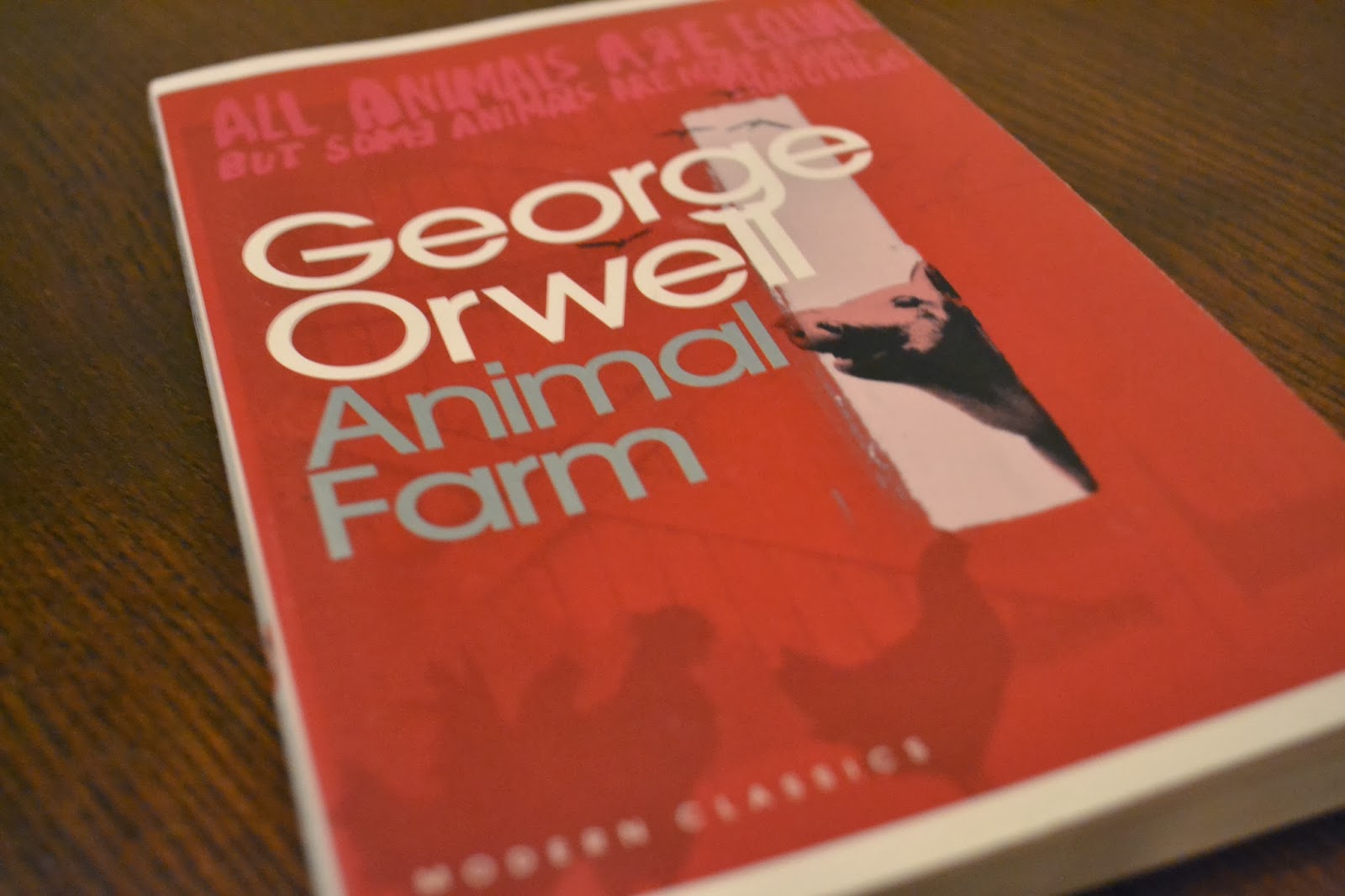
Animal Farm (George Orwell)
It's been many a year since I last read 'Animal Farm' at school, and
after some long reads, I fancied something short, but not so sweet...and I saw
it on the cheap.
There's probably not much that I can say about the book that hasn't
been said before, and much better (just like every other book I've ever read),
so I won't bother pretending that there's anything I can particularly say about
it, other than that it is the classic it is, though, for me, not Orwell's best.
Days to read: 7
Days per book: 16.1
More Trees to Climb (Ben Moor)
Ben Moor has always been a bit of a Kevin Eldon for me: pops up in the
shows of more successful comedian friends. Though Moor was always a bit of a
poor man's version. But the boy has talent!
The scripts from three Edinburgh shows, 'More Trees to Climb' is a
collection of bizarre tales, but done with an earnest wit and charm that make
their short length seem like a bit of a prick tease.

The manner of the writing (or delivery if you're lucky enough to have
seen the shows) flows effortlessly, despite the peculiar nature of the subject
matter and punbearable wordplay.
This is a book that is simultaneously hilarious, magical, endearing and
all that other crap. Now, I simply want to see him in his own show...much like
Kevin Eldon.
Days to read: 6
Days per book: 15.9
Mustn't Grumble (Joe Bennett)
With nothing on my book shelf that hadn't been read needing something
to read, I dipped into my girlfriend's book collection, picking one of her many
books by non-Aston Villa left back, Joe Bennett. Being English, I opted for
'Mustn't Grumble', the Englishman in Kiwiland's journey around the land,
commenting on how we're all moaning bastards.
Following in the footsteps of Morton before him for much of the
journey, 'Mustn't Grumble' is very much like fellow Englishman living abroad,
Alan Booth's 'Looking for the Lost'. Taking the same route as someone before
him, he journeys in pursuit of identifying a national identity, stopping off in
as many drinking establishments as possible along the way. But while Booth
chose to walk, Bennett chose the very thing Booth was against: hitchhiking,
only to quickly find that this will never happen in modern day England, soon
deciding to borrow the car of an old school friend.

'Mustn't Grumble' is also written in the same, dry, almost arrogant wit
of Booth's travel accounts; often humorous, often insightful and well-observed,
often borderline alcoholic. And while entertaining, Bennett doesn't quite have
the same magic as Booth, though with many of his titles sat on my girlfriend's
shelf, I'm sure I'll be polishing off some more of his titles soon.
Days to read: 15
Days per book: 15.9
Samaritan (Richard Price)
'Clockers' is without doubt one of the best books I've read in a while.
Richard Price's story of a battle-weary detective's working through a case that
makes him rethink his preconceptions is a detailed account of the motivations
around murder and how the authorities work to solve them. 'Samaritan' is a
similar story, again looking at a veteran detective, working a final case
before retirement, struggling to comprehend the motivations of victims and
suspects alike.
Returning to the fictional town of Dempsey, New Jersey, Ray is an
overly generous television writer volunteering at a local school who is
attacked at his home. With the case lacking interest for most detectives, the
soon-to-be-retired Nerese, an old school friend of Ray, takes the case on but
finds her old pal unfriendly in volunteering information as to who may be
involved in his attack.
Again, Price divides the telling of the story between the two sides,
detective and victim, gradually piecing the puzzle together and leaving the
reader guessing as to the final outcome. Again, this is an absorbing read,
drawing you in and leaving you to play detective yourself; coming to your own
conclusions from seeing both sides of the story, unlike the protagonists.

'Samaritan' is good: Price has a definite style to his writing which is
evident from both this and 'Clockers'. However, while 'Clockers' has
eye-opening revelation, the conclusion to 'Samaritan' fails to hit the same
heights, perhaps due to so many potential suspects turning it into more of a
whodunit than an in-depth, psychological piece as to motivation to crime.
Days to read: 21
Days per book: 16.0
Subscribe to:
Posts (Atom)